Tracey Knowels
Chief People Officer, Wirex
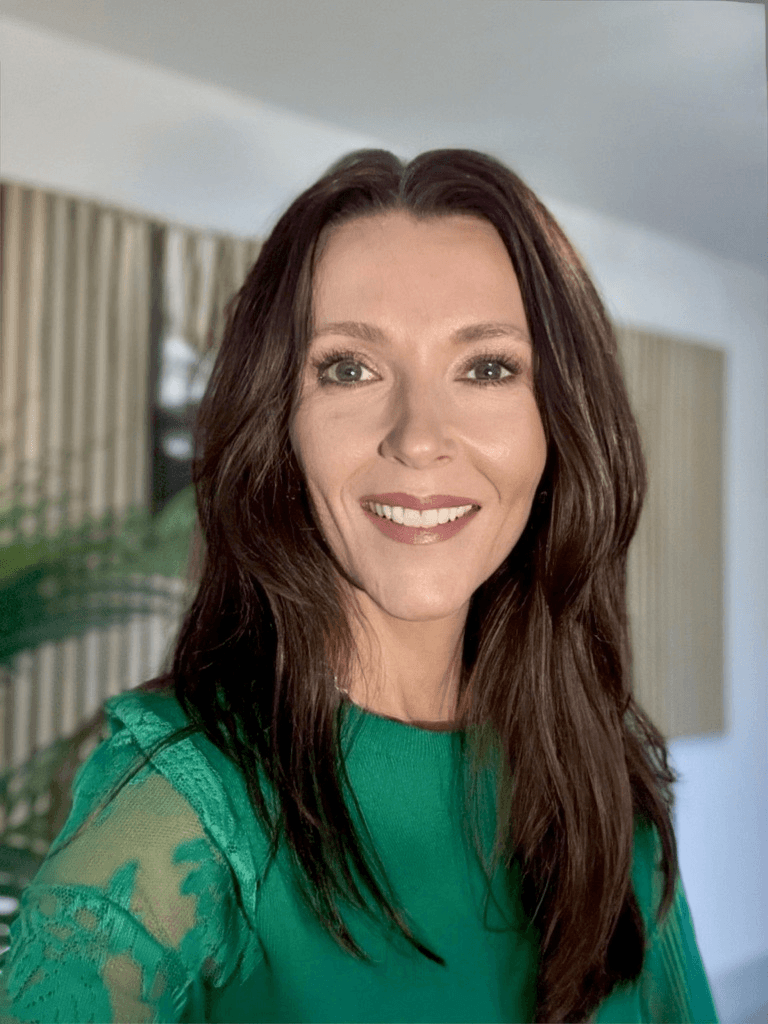
Tracey, your first job after college was in sales, and you’ve once said you absolutely adored it. What brought you to fintech?
Yes, my first role after college was in sales, and I genuinely loved it. Sales teaches you so much about people. You learn to listen, build relationships, understand motivation, and those skills have stayed with me throughout my career, and they are, I would say, fundamental to my success.
Since around 2013, I’ve started working in technology-centric businesses, which I find incredibly interesting. Technology is shaping how we live our lives, both professionally and personally, so being part of companies that sit at the forefront of that change has always excited me.
Fintech is particularly fascinating, because it’s challenging long-established financial systems and rethinking how people interact with money. When I joined Wirex it felt like stepping into a whole new world. Crypto and fintech move incredibly quickly, and the learning curve was, and still is, steep. But that’s part of what makes it so good. When you’re curious about the industry you work in, the challenge becomes part of the reward.
I often say I could work in HR in many different industries, but I do feel a little bit spoiled to work in fintech and crypto. It’s something of a cheeky claim to fame for me.
You describe your work in sales as really inspiring. How did this initial career experience shape your career path?
I’ve been fortunate to work for some great companies, but leaders I worked with shaped my early career the most. I, honestly, never tire of talking about the influence leaders have on people’s careers. A good leader can transform someone’s confidence and potential, while the wrong environment can hold someone back for years.
My first employer was a place where I stayed for nearly seven years, and during that time I grew more than words can describe, not just professionally, but personally as well. That period completely shaped the professional I became.
That doesn’t mean it was easy. At times it was incredibly challenging. But looking back, those challenges, combined with the guidance of strong leaders, helped build resilience, judgement, and a much deeper understanding of what good leadership really looks like (and feels like!).
The impact leaders have on someone’s career is one of the reasons I care so deeply about leadership today.
Absolutely, sometimes people you meet change your life completely. Moving to your current experience, what was the hardest thing for you, as you joined Wirex as CPO in 2022? What did you feel about building people's culture inside a fast-moving crypto company?
Anyone who follows the crypto industry remembers that 2022 was a really challenging time for the sector. Joining during that period meant balancing a very complex set of realities. I believe some might say it was a “baptism of fire.”
I quickly realised that crypto companies are changing incredibly fast. There’s a strong “build and move quickly” mindset, and innovation and speed are essential here. At the same time, fintech operates within some of the most rigorous regulatory environments. It is not simple to balance speed with strong compliance and governance.
Another challenge is the pace of change. In fast-growing technology businesses, staffing needs fluctuate quickly, and the necessity to scale teams and protect the culture simultaneously puts real pressure on organisations and their leaders. Line managers are especially facing this pressure, since they are responsible for supporting teams through that change.
The industry is also very intense. It’s global and operates around the clock, attracting people who are incredibly passionate about what they’re building. That energy is powerful, but it also means leaders must pay close attention to burnout and wellbeing of their teams.
Given how fast-paced and demanding this industry is, how do you see the role of People and Culture evolving within organisations?
For a long time, HR was seen primarily as a reactive function, often being asked or told to step in once decisions had already been made (or gone wrong).
But the reality is that people's strategy underpins almost every business outcome. When People and Culture leaders are involved in strategic planning at early stages, organisational design and culture became the foundation of the business.
An analogy I often use is architecture. If you show the project to a structural engineer after the building has been designed, you may discover fundamental issues that require costly adjustments. But if they are involved from the beginning, their vision supports the entire structure.
The world of work is changing rapidly. Roles are evolving, career paths are less linear, and employees increasingly expect flexibility, purpose, and autonomy in their work. Organisations need to think much more intentionally about supporting different motivations and ways of working.
So, the People function cannot remain purely operational. Of course, the traditional responsibilities such as hiring, performance management, payroll, employee relations are all important. But the role of People leaders today is also to help organisations navigate the future of work.
You often mention that HR is more of a calling than just a job. What does that mean in practice, especially in fast-moving industries like fintech and crypto?
Yes, I consider HR much more than just a job. To be good at it, you genuinely have to care about people and want to influence positive change. It can be a demanding role and sometimes a thankless one, but I find it incredibly rewarding because of the people I work with. For me, that’s the difference between simply turning up to work and truly being energised by what you do.
At Wirex, we run biannual employee engagement surveys. One of the things that makes me most proud is why people enjoy working here. Among the top answers, there is “the people.” Culture ultimately comes down to persons you choose to bring into the organisation and the way you support them.
In the fintech and crypto space specifically, I’ve observed some very distinctive qualities. People in this industry tend to be extremely ambitious and forward-thinking. There’s a strong belief that almost anything is possible, and this approach drives innovation and creativity.
Can you share any observations regarding female career paths in this field?
From a gender perspective, it’s encouraging to see strong female representation emerging in some organisations. At Wirex, for example, we have a close to 50/50 gender split, with 49% female representation. It has developed organically.
Diversity of perspective strengthens both decision-making and innovation, and having balanced representation brings a wider range of ideas and experiences to the table. That is what companies should strive for.
That is truly inspiring. How do you recognise true leadership potential in women in the sphere of fintech? What are the main “flags” you pay attention to?
I believe it is rarely about the loudest voice in the room or the most visible personality. In my experience, it’s much more about judgement, curiosity, and resilience.
I look for people who are willing to take ownership and who approach problems without defensiveness. Strong leaders listen well and ask thoughtful questions. They are comfortable with challenging ideas respectfully.
Another important signal is how someone treats others. Leadership is about creating an environment where the team can succeed as well.
Confidence also matters, but I would distinguish it from certainty. Some of the strongest leaders are those who are confident enough to acknowledge that they may not know something. Accepting your own limitations is a great quality to have.
For women in particular, I often look for authenticity. I find it important to behave as themselves rather than fitting into a predefined leadership style.
And of course… stay humble and leave your ego at the door. Humility is a really powerful quality. The best leaders focus on the success of their teams, not on themselves. As I see it, women leaders develop this instinct very naturally. They tend to place collective success ahead of individual recognition.
That distinction between confidence and certainty feels especially relevant when we talk about leadership. So let me ask you our final question. What’s the one thing you would change about how the industry treats women leadership — and what would that improve?
I would change the subtle expectation that women need to adapt to be taken seriously.
Across many industries, not just fintech, many women told me that they feel pressure. They say they need to perform like a traditional leader, to fit in traditional expectations.
In my own career, I’ve learned that confidence comes from your own experience and judgement rather than from trying to be what others expect. When organisations create space for authentic leadership, regardless of gender, they unlock better decision-making.
Ultimately, leadership diversity is much more than just representation. It means that you let people with different perspectives and experiences lead in ways they feel natural and efficient.
And if I could give my younger self one piece of advice, it would simply be this: be you, do you… you’re enough.
