Solange Gueiros
Blockchain Developer & Relations Education Manager at Chainlink Labs
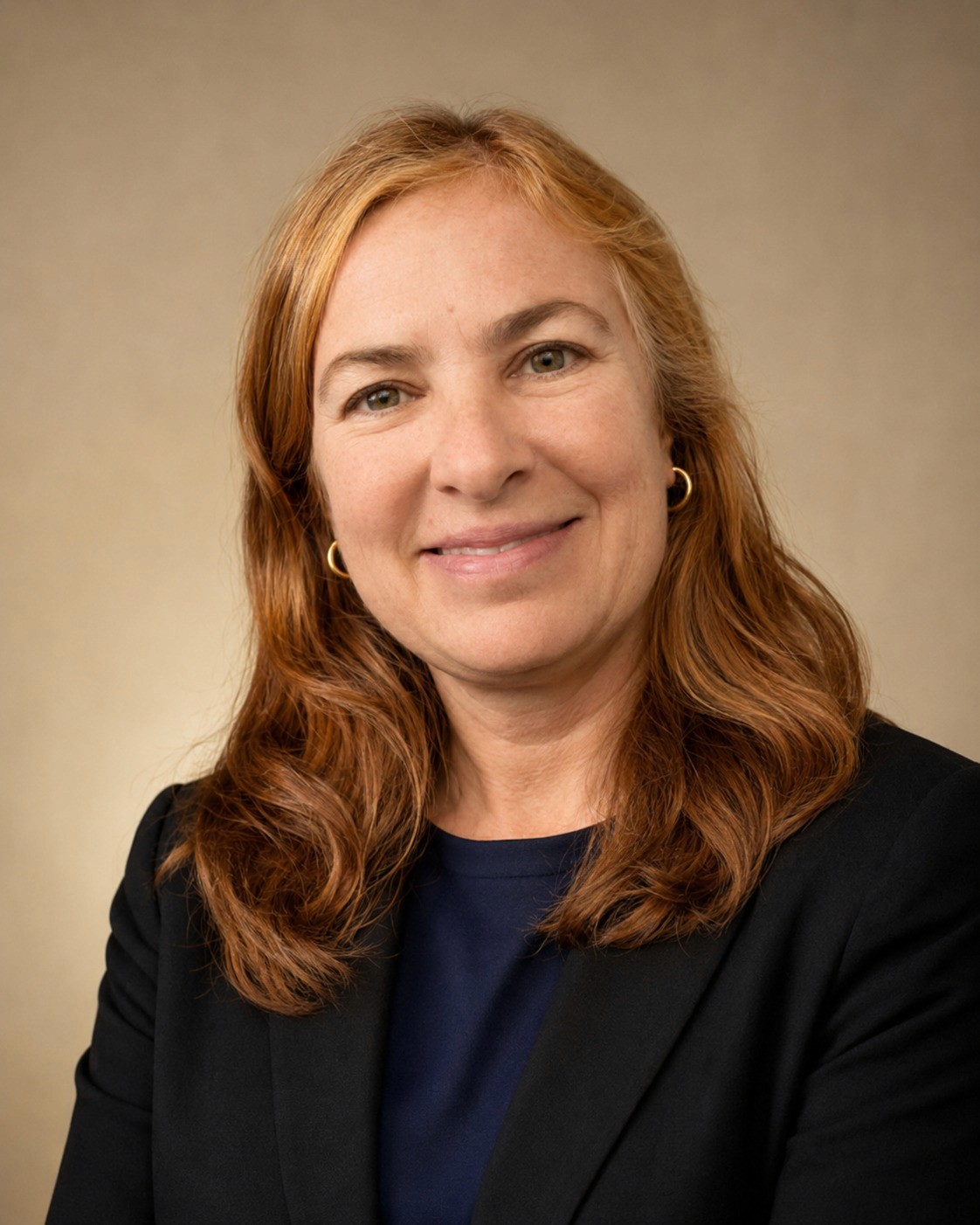
Solange, having spent more than 20 years in technology, how have you seen the experience of women in technical roles evolve, and where has progress remained too slow?
I see more women involved in technology in general and participating in tech events, which is already a positive change compared with when I started my career. There is more visibility today, and more women are entering technical communities and taking part in industry discussions.
At the same time, I think the foundation is still where more work is needed. We need to start earlier, with girls, and give them more exposure to technology from a young age. If they can see technology as something open to them from the beginning, it becomes much easier to build confidence and consider technical careers later on.
Undoubtedly, introducing girls to technology from an early age can help build both confidence and interest long before they start thinking seriously about their careers. Turning to blockchain itself, what technical capabilities must blockchain networks demonstrate before companies can confidently use them in production?
Confidentiality and privacy are areas that have been a focus of attention in recent years and are important for companies.
Transaction capacity (TPS) is a point to be considered, because what matters is sustained throughput under adversarial load to ensure that a blockchain is scalable enough to meet business demands.
Another point is the finality, the point when a transaction is irreversible. Public blockchains, which work with probabilistic finality, are not the best approach for companies. Yet, the deterministic finality that comes from BFT (Byzantine Fault Tolerance)-style consensus and is used in some permissioned blockchains can solve this issue.
You’ve highlighted some of the core technical requirements companies need to consider before using blockchain in production. In this context, why are oracles, reliable data and interoperability so important for institutional blockchain applications?
A blockchain with no connection to the real world has little utility. So, oracles are the foundation for a blockchain to exist in the real world.
Data must be reliable in two respects. First it should ensure that the original data is correct — which depends on the provider — and second, it should guarantee the integrity of how that data reaches the blockchain, in other words, what kind of oracle. Decentralised oracles are crucial to avoid a single point of failure where one entity can control or manipulate the information.
Companies have different needs and standards, but they do not operate in isolation. Interoperability is what drives the world, ensuring communication between systems and blockchains.
Looking at the people building such sophisticated systems, which technical skills are currently most lacking among blockchain developers in Brazil and Latin America? How can education programmes address that gap?
Nowadays, I don't see a lack of technical skills among Brazilian or Latin American developers. I also see many more Brazilians working for international companies and even participating in international conferences and hackathons.
And I think the education programmes that we have already done have contributed significantly to this. Therefore, it is important to continue organising bootcamps and workshops like these.
Indeed, such programmes foster practical skills, confidence and stronger connections with the wider blockchain community. Getting back to women in the industry, what do you think tends to prevent them from entering blockchain development or remaining long enough to advance into senior technical roles?
When I entered the blockchain space, I was warmly welcomed. I met event organisers who wanted more women on stage but couldn't find them.
I remember LaBitconf 2018 in Chile, where I was invited to speak about Ethereum on a panel alongside the founders of other blockchains. I felt so tiny, as I was standing among gods, and talking with them. But Rodolfo Andragnes, the organiser, saw my potential and invited me. So, I had to believe in myself and take the stage — speaking in English, a language I didn't yet feel fully confident using at that time.
At times, I was the only woman giving talks or sitting on panels, but the fact that I didn't let that bother me was what kept me moving forward.
I started by paving the way for other women, and today there are various programmes to foster this. The important thing is not to feel uncomfortable if you are the only woman; you yourself can bring others into the space. On the technical side, blockchain and technology in general, it is a mental pursuit, and the brain has no gender.
Thank you for sharing these insights! Finally, based on your experience as an educator and ETHSamba co-founder, what would you tell a woman who is interested in blockchain technology but feels that she lacks the credentials or confidence to begin?
If someone lacks credentials, the only way to acquire them is through dedication and study. When I realised that blockchain was going to change the world and decided I wanted to be a part of it, I was working in another tech field, 8 hours a day.
When I got home, I would spend at least another 6 hours studying at night and dedicate myself fully on weekends. There was already demand in the field, and in less than a year I was already working. I could even have started to work earlier, but it was my moment to feel ready.
Confidence can also be developed. Start with small things you find difficult, and gradually master and conquer them. Believe that you can do anything you want, and that the only person who can limit you is yourself. This is a life lesson.
