Ivana Rocha
Technology Sales Leader at IBM
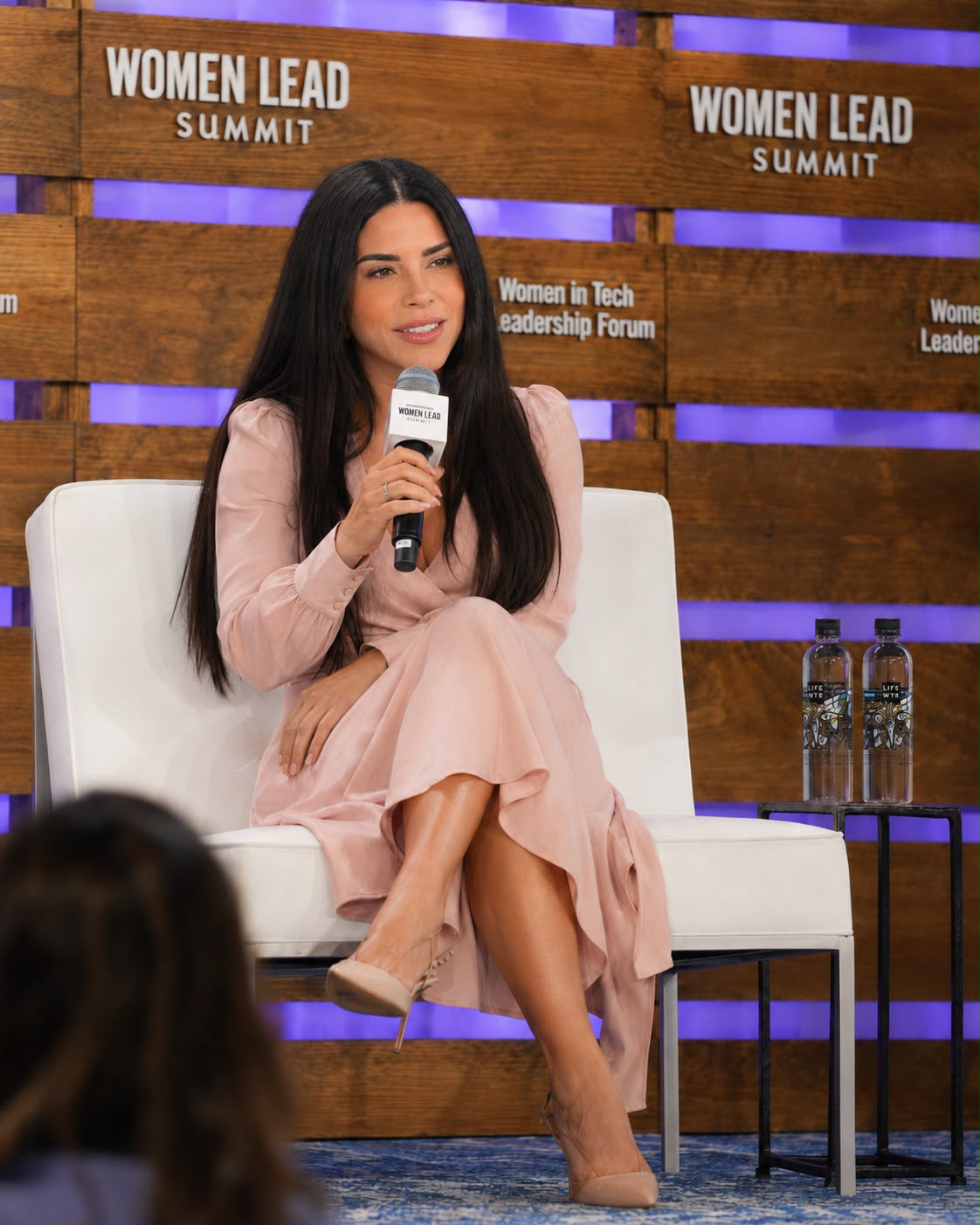
Ivana, you built a strong marketing career in Brazil before moving to New York and starting a new professional chapter in the U.S. What do you remember most about that transition, both personally and professionally?
Thank you for saying that. What I remember most is actually the excitement of the unknown. I always say, “Just grab your stuff and go, girl.” That's what I usually do. I grab and go. I'm naturally upbeat, and I manage the unknown really well. I get excited about what's next, and I honestly think this trait is a blessing.
So when I moved from Brazil to New York, I was excited. I knew this was a new adult chapter of my life, and I was ready to see what I could do with it. But I was also leaving behind an established life in Brazil (a big network, a clear career path, a place where people knew who I was) to land in New York, where nobody knew my name and my accent walked into the room before I did.
In many ways, it felt like being thrown back to zero as an adult, with no real safety net. Professionally, I went from being “the girl who knows everyone” to being the foreigner quietly observing the room, learning how people worked and figuring out where I fit. I was fascinated by how different the American workplace was from Brazil, particularly for women.
And I think that's where something important happened. I had to find out what was left when nobody knew my name, my network or my reputation. What was left was me. My ability to learn quickly, read a room, connect with people, understand a business and adapt across cultures.
And I still love that feeling today. I love being the woman who walks into a room knowing I know some things they probably don't expect me to know.
That sounds very courageous, and we know that not every woman can do that! In a new environment, did you ever feel that you had to “translate” your previous experience into a new language for the tech industry?
It’s funny that you use the word language, because I really believe every profession has its own language. Marketing has one, technology has one, doctors have one, mechanics have one. And you learn to speak that language through practice.
For me, though, the transition from marketing into technology felt very natural. I was fortunate to build my career at a time when technology was becoming increasingly embedded in marketing. I went from things we now consider basic, like newsletters, email marketing, and digital campaigns, to creating experiences and using new technologies to demonstrate and market products, and eventually to Product Marketing Manager for very technical software. And that was probably the best training I could have had for what I do today.
The thing is, when you're a Marketing Manager of a complex technology product, knowing the product isn't enough. You have to understand the technology, the market, the customer, and the problem the customer is actually trying to solve. You have to be able to translate between all of them. So I don't think I had to prove that my marketing background had value in technology. Over time, I realized it was actually one of my biggest advantages.
I also think people underestimate how much technology leadership you can develop through product marketing. You're constantly sitting at the intersection of the product, the market and the customer. And that intersection is still where I operate today. It’s gold!
You’ve talked about the intersection of technology, the market, and the customer being “gold.” When did you realise you wanted to take that experience and apply it to a problem of your own through TryIVA?
It was very personal. I’m an only child, raised by a single mother who was also raised by a single mother. Both my mother and my grandmother experienced abandonment. So from a very early age, I watched incredibly strong women trying to survive in a world that, particularly in their generations, was not really built to support them.
And then, eventually, it became my story too. I went through a difficult marriage experience and divorce and had significant trauma afterwards. I was in a horrible state, and I tried almost everything to feel like myself again. And what frustrated me was how fragmented the experience could be. I could have a very short consultation with someone, receive a prescription, wait weeks or months, come back, adjust it, try something else, and try and try and try; nothing deep enough. I lost two years of my life in this cycle.
Eventually, I started doing what I know how to do professionally: I investigated the problem. And noticed something was missing. I was trying to understand the relationship between my mental health, my body, my hormones, my experiences and my environment. I researched a lot for nights and nights. I looked for patterns. I used technology and AI to help me organize information and understand questions I hadn't known to ask. And I became fascinated by how much more context we could potentially bring into understanding a woman's mental health.
Then something clicked for me.
And I thought: Technology is what I know now. Why wouldn't I use it to work on this problem?
That became iVA.
I'm building what I wish the three of us had had in our different moments: something that helps a woman bring the pieces together, understand herself more clearly, and arrive at the right professional support with better information and better questions.
I don't want the next generation of women to have to experience mental health that way.
Thank you for sharing something so personal. It’s heartbreaking to hear. We know that women’s mental health is often affected by hormonal, biological, behavioural, environmental and emotional patterns, but many women still feel that their symptoms are fragmented, dismissed or misunderstood, as you said. What gap are you trying to address with TryIVA?
Honestly, I’m trying to address a very simple gap: dedicated attention to women’s mental health. I don't think it needs to be more complicated than that.
You're a woman. Your body, your biology, your hormones, your experiences and your environment can all influence how you feel. So when something doesn't feel right, you deserve an experience that actually looks at you in that context.
That's where the name iVA comes from: Insight, Validation and Action. Insight — so when you're struggling mentally, sometimes the hardest thing is simply understanding what is happening to you. iVA is designed to help you bring information and give it names, and also bring together a picture of you so you can understand yourself more clearly.
Then, validation. I think this is incredibly important for women. Before you can decide what to do, you need to feel that what you're experiencing is real, that it deserves attention, and that you're not simply overreacting or imagining it; you 100% need validation.
And then, action. I don't want iVA to be another place where a woman gets information and is left alone with it. The goal is to help her understand what her next steps could be and connect her with the appropriate professional support, ideally specialists who understand not only the issue she's experiencing, but also women and women's bodies.
So the idea is actually very simple: Understand me, validate me and help me know what to do next. That's the gap I'm trying to address. Because ultimately, I want women to spend less time wondering “What is wrong with me?” and more time understanding themselves, getting the right support, and being able to live their full potential.
That makes the philosophy behind iVA very clear. But still, is AI in mental health a sensitive field? How do you think about the responsibility of using AI to offer women more personalised insight, validation and action while still protecting trust, privacy and emotional safety?
This is a very important question, and for me it is also a very technical one. In technology, this starts with data governance: understanding where data comes from, how it is used, accessed and protected throughout its lifecycle. For iVA, data provenance and lineage are especially important. What research is informing the system? Is it current? Can we trace it? Were women adequately represented? Because AI is only as good as the information behind it.
Then you have privacy and security by design, combined with AI model governance, things we call explainability, traceability, testing and human oversight.
But there is an interesting irony when we talk about trust. For decades, we trusted medical systems and research even when women were excluded or underrepresented in important areas of that research. We didn't always know what was missing.
So responsible AI is also an opportunity to use technology to address some of the gaps we inherited from the systems that came before it.
In plus, AI in mental health requires technical discipline. The frameworks already exist: governance, guardrails, security, privacy, model controls and human oversight. So our responsibility is to apply them rigorously from the beginning.
I think that irony is really interesting — we’ve historically trusted systems that were built on incomplete data, and now we’re asking AI to be held to a much higher standard. Looking back at your journey from Brazil to the USA, what advice would you give to women who are facing a major life or career reinvention?
There is something beautifully rebellious about being a woman who reinvents herself, isn't it? I think reinvention is simply part of the modern world. Think about your own career. Did you know five years ago that you would have exactly the title you have today? Ten years ago? When you were a child, did you even know your current job would exist? I certainly didn't.
For a long time, we were taught to think about careers in a very linear way: What do you want to be when you grow up? You study something, you become that thing, and somehow that becomes your professional identity. I think we're moving beyond that. We don't have to wear one hat for the rest of our lives.
Today, we can take the knowledge we've built, add new knowledge, combine it with our personal experiences, our story, what we care about, and create something completely new from it. My advice would be: don't be afraid of reinvention. Expect it because career reinvention is such a powerful form of rebellion and one of the best things that can happen to you.
But the caveat is that it's much easier to embrace change when you're mentally well and empowered enough to. And that's also part of what I want iVA to give women: the support and clarity to get back to a place where they can imagine, create, and become their next version.
