Bianca Buzea
Founder of DevRel Uni
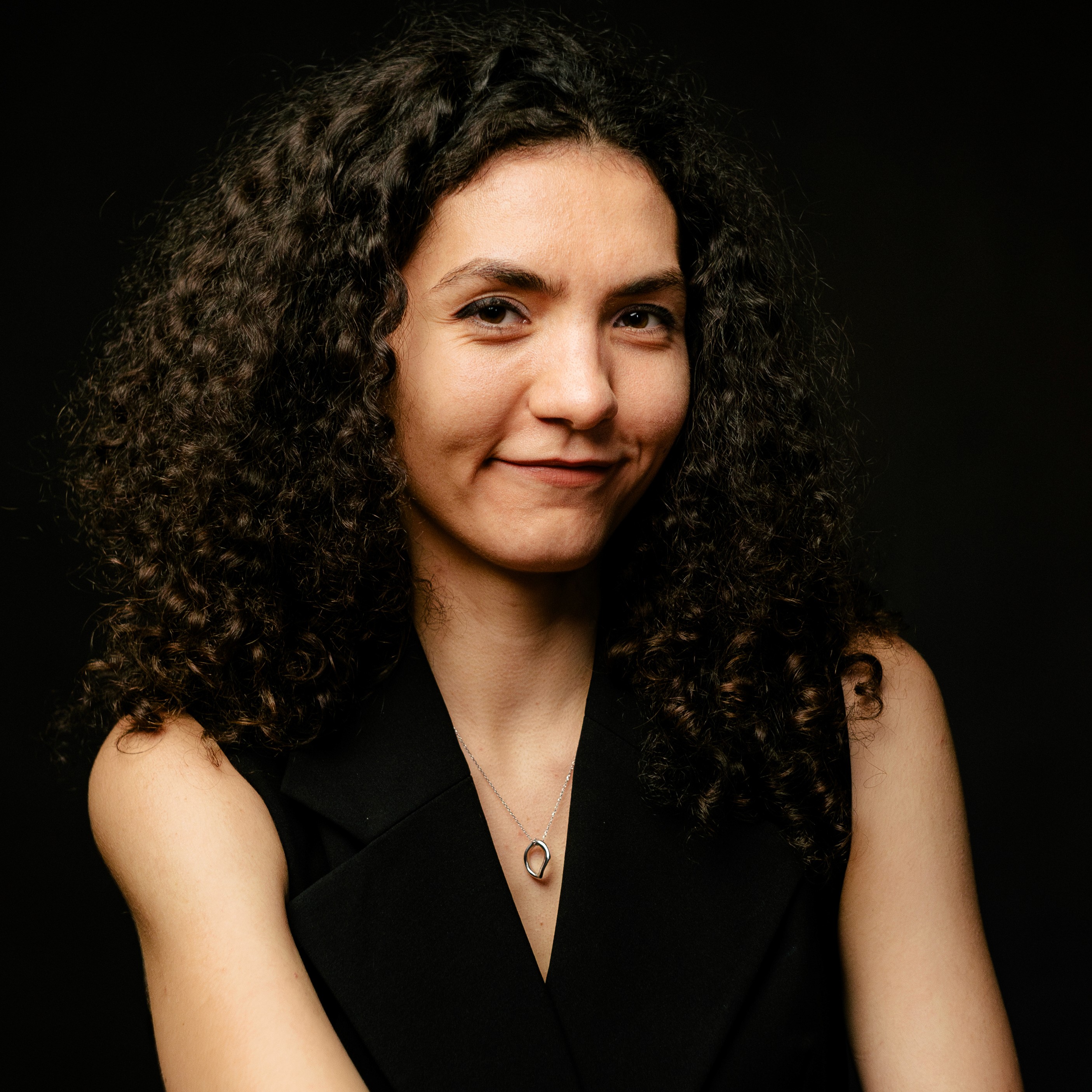
Bianca, could you tell us how your journey into tech began, and what eventually led you into the Web3 space?
Tech and teaching have always been part of my world. Both of my uncles work in tech and inspired me from a very young age, while my mother has always been a teacher. When I think about what I do now in DevRel, teaching about technology, it is really the perfect merge of both worlds. I did not connect those dots at the time, but in hindsight, it all makes sense.
Talking about Web3, I discovered this space in 2017. Before making the full leap into it, I was already involved in different Web3 initiatives at AWS, so I wasn't a stranger here. But everything changed at ETHDenver 2022. It was the first time I connected in person with people who were as passionate about this technology as I was, and something just clicked. Eventually, I realised I wanted to be fully part of this community.
Externally, leaving a FAANG company for a Web3 startup looked like a crazy move. People who didn't know me well were genuinely surprised. But for me, it felt quite natural. The role was the same, helping developers succeed, I just changed the space.
Glad you found your passion and mission and got an opportunity to connect them in one project. Considering your experience, what does DevRel mean for Web3 today?
The biggest misconception I still hear is that DevRel is sales. It is not. We do not touch sales directly. What we do is support the revenue pipeline by helping developers reach the point where choosing your product feels like the obvious, natural decision. For example, at Chronicle, I remember a customer who couldn’t choose between providers. We worked closely on their questions together and, alongside the core product, they saw the level of support we could offer. So, they chose us. That is DevRel in action.
What makes Web3 specifically exciting for me is the community. I have met some of the most interesting people in this space, and that gives me a lot of joy. Also, I find it energising being in a relatively new ecosystem, because you feel like what you do matters, actually, and has an impact.
This example really highlights the importance of DevRel. Since you mentioned helping people learn, let’s move to DevRel Uni, which you founded. What gaps does it aim to fill in the industry, and does it help shorten the entry path into tech, especially for women?
DevRel Uni was born out of personal frustration. I was looking for a community and resources in the sphere, but I realised that, despite there being many communities for developers, DevRel was kind of left apart. Here I thought: I am a DevRel, I have a great network, so I’m just going to build it.
Students learn the craft of DevRel through hands-on assignments and, by the end, have a real portfolio to share with employers. In addition, they get stronger visibility on social media. We do our best to give our students further opportunities, though, of course, a lot depends on the effort they put in themselves. What we can guarantee is that they leave with something tangible.
We have had plenty of women across our cohorts, and many of them went on to build careers in DevRel. Others took what they learned in entirely different directions, starting their own projects. One participant even described our programme as a turning point. She said it shaped how she thinks about community, storytelling and building in public. In her words, a lot of what she has done since then traces back to our project. Another person said it pushed her to communicate complex ideas clearly and to understand how to actually show up in tech. That is exactly what we set out to do.
It must be pleasing to hear such kind words from people you help. And looking more broadly at the industry, what are some of the biggest challenges women still face when entering and growing in tech and Web3 today? What are these barriers about?
Full disclosure, my whole career I have been surrounded by men, so I got a bit numb to it over time. At university, women made up around 12% of my year. In my first role, I was the only woman on a team of 14. So this has always been my reality.
Research points to a phenomenon called the "leaky pipeline," in which girls are steered away from STEM at young ages, while women later face work environments that lead to high attrition. The lack of representation is basically a combination of social, educational and cultural factors.
At the beginning of my Web3 career, I used to feel a particular pressure at conferences, as I was one of the very few women in the room. I was new to the space and didn’t know many people. It just feels like you are the person everyone is looking at, whether you want it or not. In some situations, it can actually be an advantage.
I noticed that this is slowly changing. Today, more women are entering the space, and I think a big part of that comes down to role models. When you see someone like you already there, you grow confident that you can do it too. Visibility creates possibility.
Thank you for sharing that. We believe many women may feel the same about their own experience in public. Since you mentioned that things are changing, do you think initiatives like women-focused panels can help move things forward?
I am actually not convinced that women-focused panels are the solution. If you think about it, they are the equivalent of male-dominated panels, just reversed. They just create the same imbalance. I think the better way to solve it is to make a more deliberate effort in building panels with diverse representation.
I have been on the other side and organised events myself, so I know it is not always straightforward. There is a lot to consider when building a panel and seeking a constructive discussion. Which companies the speakers represent, what the relationships are between them, and who will actually be in town for a given event. I understand it is not always easy to align everything perfectly, but the effort should still be made.
At the same time, there are already more women at events than previously, and I think it is worth acknowledging.
What may move the needle most meaningfully is mentorship. When you have someone a few steps ahead, holding a torch, you build confidence and move faster.
However, I want to mention that, at the community level, there is still one thing that, in my opinion, is not great. In Web3, your opportunities are mainly determined by networking. This sphere has always been heavily network-based, but with the wider adoption of AI, many roles never even get posted publicly anymore. You need to know the right people, and it is much harder for newcomers to succeed. This is why building a public profile matters more than ever. You need to share your work on social media, write, and build trust in public. As I mentioned earlier, the more visible you are, the more opportunities you will find.
That’s a really interesting point of view. To wrap our discussion up, we’d love to ask: if a woman is considering entering Web3 or DevRel today but feels unsure, what would you tell her?
The one thing I wish I had done faster before entering the space is to build a network with other DevRels. Those relationships would have accelerated everything. So that is my first piece of advice: do not wait until you feel ready and find your people first.
On the DevRel side specifically, I think it is helpful to have multiple interests, as this sphere sits at the intersection of technology, communication and community. You need to understand the product deeply enough to speak credibly about it. At the same time, you also need to listen, advocate and connect. People who have built skills across different areas tend to thrive here more.
I feel optimistic about where the space is going. Web3 is still a young ecosystem, and there is room to shape it. The community is growing, more women are visible in senior roles, and that visibility matters more than people realise. It shows that you can achieve this too. If you are on the fence, my honest advice is to just start. The space needs more diverse voices, and yours is one of them.
