NEWS
NEWS
Philippine Blockchain Week 2026: What Women Leaders Say About Blockchain's Next Chapter
Philippine Blockchain Week 2026: What Women Leaders Say About Blockchain's Next Chapter

More than 15,000 founders, investors, developers, policymakers and entrepreneurs gathered in Manila for Philippine Blockchain Week 2026, one of Southeast Asia's largest blockchain events. Held from 19–21 June at the SMX Convention Centre under the theme Decoded. Deployed., the conference explored digital finance, artificial intelligence, public infrastructure, education and the next generation of blockchain applications.
Drofa Comms attended the event as General Media Sponsor through its Women Leading the Way initiative. Throughout the conference, Content Manager Vladimir Rozhankovsky interviewed founders, exchange executives, educators, policymakers and ecosystem builders to understand how they see the industry's next stage of development.
Taken individually, those conversations covered very different subjects. However, read together, they revealed a pattern:
Blockchain is steadily becoming part of a much broader discussion about trust, usability and digital infrastructure.
The technology itself remained central to every conversation, yet the questions surrounding it have expanded. Product design, public adoption, digital identity and the integrity of information now occupy the same space as protocols, tokens and decentralisation.
That broader perspective shaped many of the interviews conducted during the event. The ideas below came from women leaders working across exchanges, blockchain ecosystems, education and digital finance, offering a snapshot of how the industry is evolving across Southeast Asia and beyond.
When Blockchain Becomes Invisible
The clearest pattern emerged in conversations about product development. Success is increasingly measured through the quality of the user experience (UX), making blockchain less visible to the people using it every day.
Christine Lim, Global BD Director at Coins.ph, described that evolution through a simple observation.
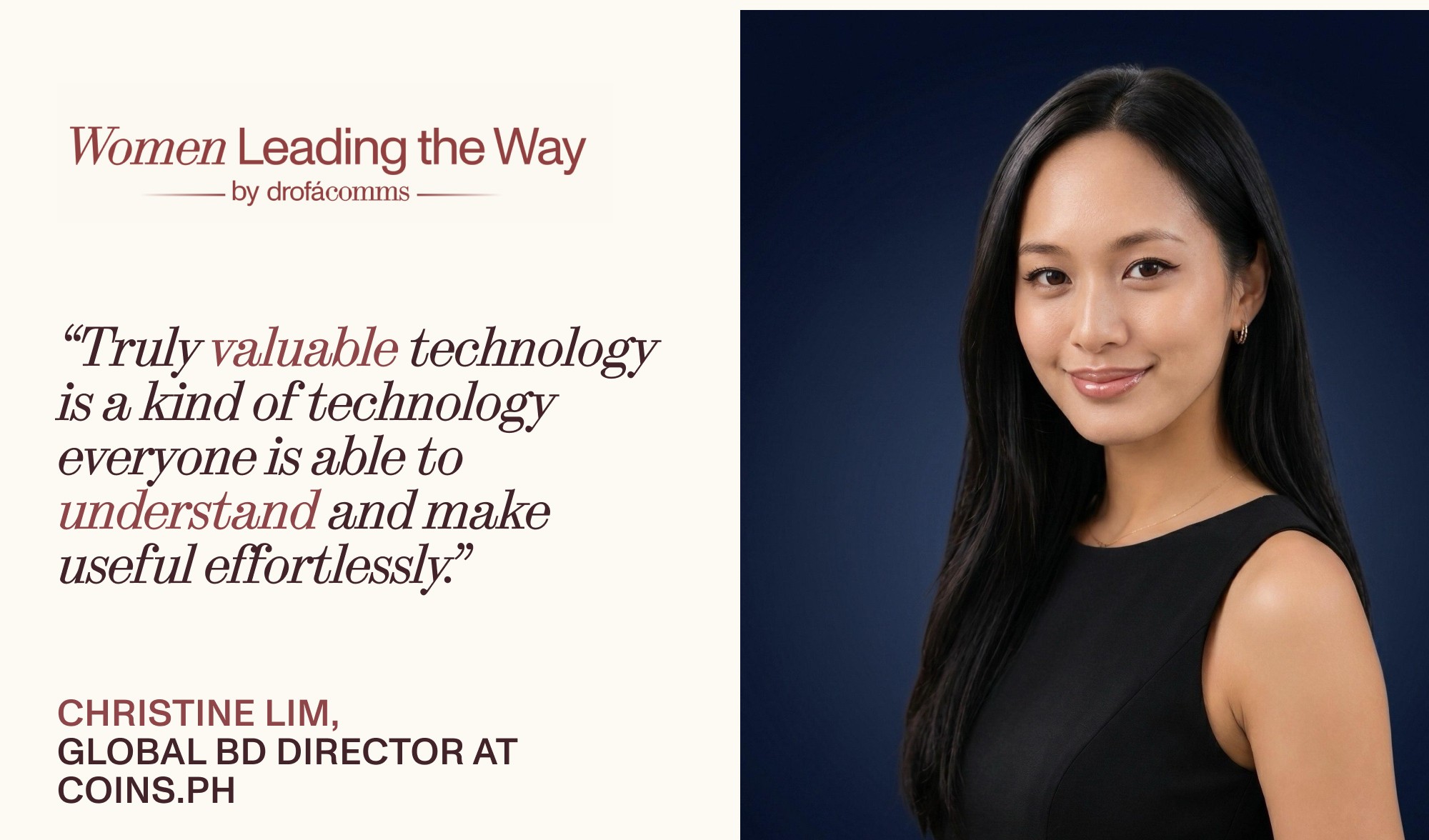
"Truly valuable technology is a kind of technology everyone is able to understand and make useful effortlessly. Why would we need really complex and too sophisticated solutions in their implementation, that very few would find personally useful?"
Her comments echoed discussions taking place across the conference floor. Founders repeatedly returned to onboarding, payments and accessibility, describing products designed to fit naturally into the digital habits people already have. Technical sophistication remains essential, yet it increasingly operates behind the interface instead of defining it.
That philosophy is beginning to shape blockchain in much the same way it shaped previous waves of digital innovation. Consumers use online banking without thinking about payment rails. Contactless transactions happen in seconds without anyone considering the underlying infrastructure. Cloud services support countless everyday applications while remaining almost invisible to their users. Blockchain appears to be following a similar path, becoming part of the experience instead of the destination.
Trust Is Becoming Part of the Digital Economy
Questions surrounding trust surfaced in almost every interview, regardless of where the conversation began. Payments led to discussions about identity. Artificial intelligence (AI) led to verification. Public services raised questions about secure records and data integrity.
Together, they outlined a growing role for blockchain within the wider digital economy.
That direction was particularly visible during sessions involving government agencies. One of Philippine Blockchain Week's defining moments came with the public signing of the Integrity Chain Memorandum of Understanding, an initiative designed to strengthen the verification of public records through blockchain-based systems. However, its significance extends beyond government administration. Businesses, financial institutions and technology companies increasingly rely on large volumes of digital information moving between organisations, platforms and users. Confidence in that information has become fundamental to digital commerce.
Artificial intelligence has accelerated those conversations. AI-generated images, documents and video continue to improve in quality, increasing demand for technologies capable of verifying authenticity and preserving data integrity. Blockchain entered many of those discussions as part of the solution, providing immutable records and cryptographic verification that support trust across digital systems.
The subject connected naturally with another priority raised throughout the conference: adoption. Products reach wider audiences when people understand their purpose, trust their reliability and feel confident using them in everyday situations.
Adoption Begins Long Before the First Transaction
Education emerged as a natural extension of those conversations. Every discussion about usability, trust or public adoption eventually arrived at the same question: how do people gain the confidence to use a technology that is still unfamiliar to many?
Philippine Blockchain Week approached that challenge from several directions. Alongside technical presentations, the programme included educational workshops, university initiatives and community-led sessions, bringing together developers, entrepreneurs, students and first-time participants. The format reflected a broader understanding that ecosystem growth depends on knowledge as much as technology.
Elle Quan, a Singapore-based Web3 professional, sees education as one of the foundations of long-term adoption.
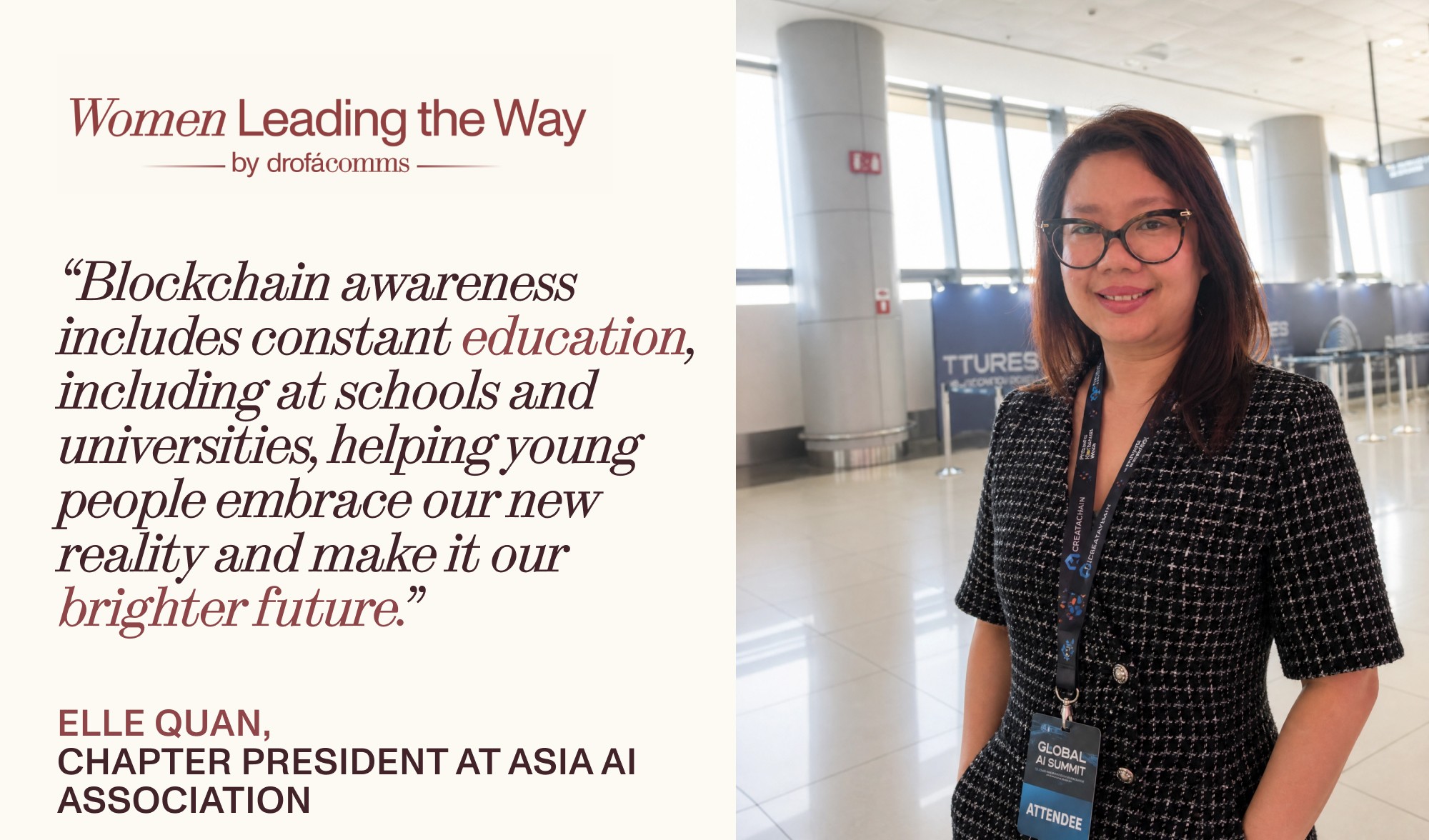
"Blockchain awareness includes constant education, including at schools and universities, helping young people embrace our new reality and make it our brighter future."
Her perspective resonated with many of the conversations taking place throughout the event. As blockchain applications expand into financial services, identity solutions and public infrastructure, understanding how these systems work becomes increasingly valuable for businesses, institutions and consumers alike. Education creates the confidence required to explore new products, evaluate opportunities and participate in the digital economy with greater certainty.
That emphasis carries particular relevance in Southeast Asia. Across the region, digital payments, mobile banking and e-commerce have become part of everyday life over the past decade. Blockchain applications are entering markets where users already expect financial services to be fast, intuitive and mobile-first. Companies building for those audiences place considerable attention on accessibility, product design and practical use cases, recognising that adoption is driven by experience long before it is driven by technology.
Communities Shape Long-Term Growth
The discussions in Manila also highlighted another characteristic shared by many successful blockchain ecosystems: strong communities.
Founders frequently described community-building as an ongoing process that extends well beyond product launches. Local meetups, educational programmes, developer networks and creator communities all contribute to the environment where new ideas are tested, products improve through feedback and users develop lasting engagement with emerging technologies.
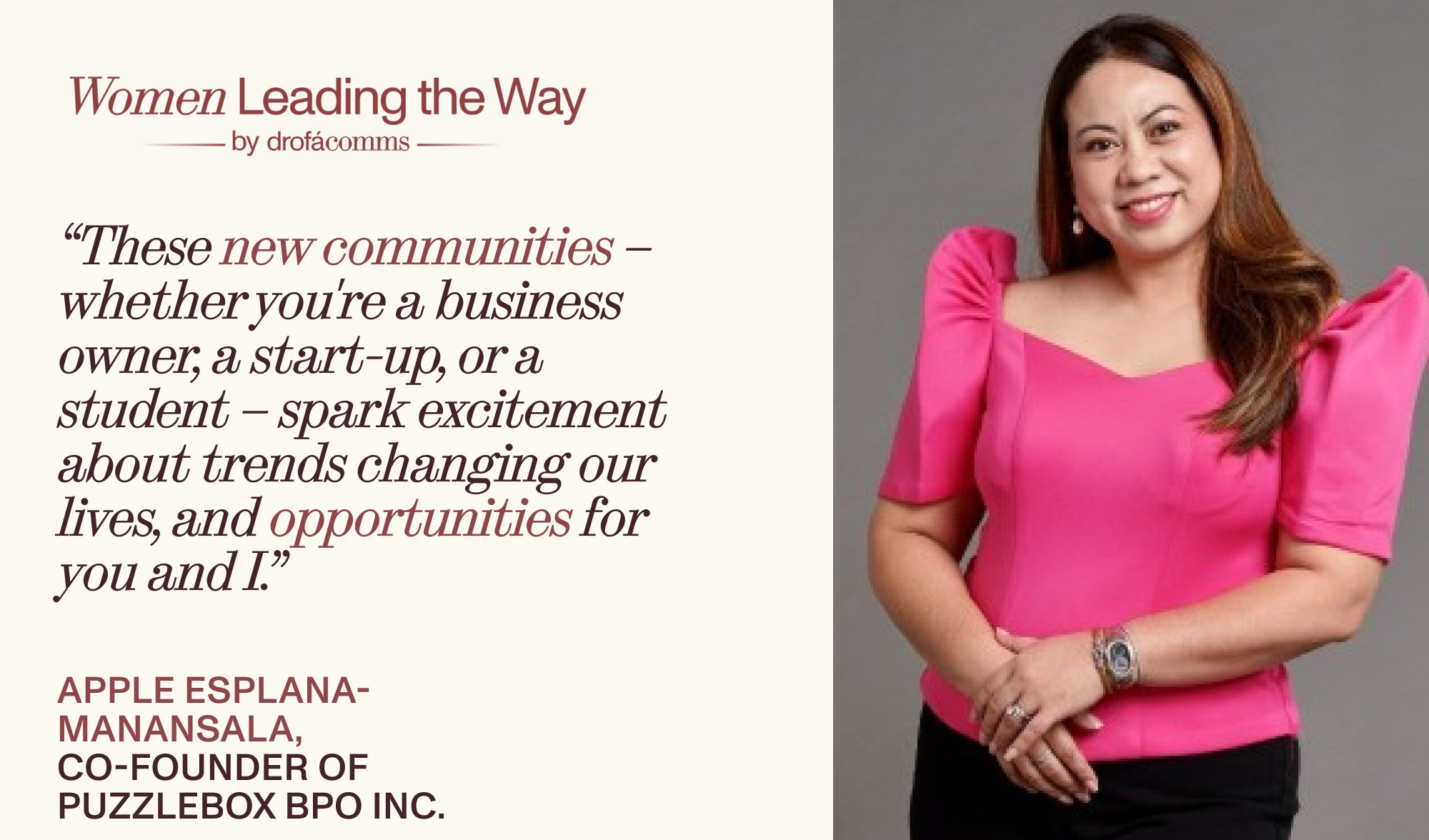
Apple Esplana-Manansala, Co-owner and Vice President of PuzzleBox BPO Inc., spoke about communities as one of the industry's most effective channels for expanding adoption. They create spaces where technical concepts become easier to understand, practical experiences can be shared openly and newcomers have opportunities to learn from people already working within the ecosystem.
That emphasis on community actually extends beyond blockchain ecosystems themselves. Throughout Philippine Blockchain Week, conversations frequently continued after the formal programme had ended, reinforcing the importance of spaces where people can exchange ideas and build professional relationships.
The same principle underpins Drofa Comms' Women Leading the Way initiative. Alongside highlighting the achievements of women across finance and technology, the initiative is building a private professional community where founders, executives and emerging leaders can continue those conversations beyond industry events. The goal is to create lasting connections, encourage knowledge-sharing and strengthen a network that continues to grow long after the conference concludes.
The value of those relationships became even clearer in conversations about the future of blockchain ecosystems. Daria Chernozub, Southeast Asia Lead at Dash, spoke about sustainability through the lens of the people who continue supporting projects across changing market conditions.

"Some people stand by their decentralisation values throughout their whole lives, and these are who make Dash run full speed for 12 years, and definitely another 12 years to come."
Her observation points towards one of blockchain's defining strengths. Technologies evolve continuously. Communities preserve knowledge, mentor new participants and create continuity as ecosystems expand into new markets and applications. They provide the foundation that allows innovation to develop over many years, supported by people who share a long-term commitment to the technology.
A Broader Conversation About the Future
Three days of interviews conducted throughout Philippine Blockchain Week 2026 revealed an industry expanding its field of vision. Together, all the discussions outlined a common direction centred on practical adoption and long-term development.
For Drofa Comms, attending the conference through its Women Leading the Way initiative provided an opportunity to document those conversations from the perspective of the people driving them. The women interviewed for this article represent exchanges, blockchain networks, educational initiatives and community organisations across Southeast Asia. Their experiences differ, yet they collectively describe an industry becoming more closely connected with everyday economic activity, public services and digital life.
The event demonstrated how that evolution is unfolding in practice. Companies are refining products around user needs. Governments are exploring trusted digital infrastructure. Educational initiatives are preparing future participants. Communities continue strengthening the ecosystems that support long-term innovation.
Taken together, those developments illustrate a market entering a new stage of maturity. The conversations in Manila offered a clear view of that trajectory and the people helping to shape it.
More than 15,000 founders, investors, developers, policymakers and entrepreneurs gathered in Manila for Philippine Blockchain Week 2026, one of Southeast Asia's largest blockchain events. Held from 19–21 June at the SMX Convention Centre under the theme Decoded. Deployed., the conference explored digital finance, artificial intelligence, public infrastructure, education and the next generation of blockchain applications.
Drofa Comms attended the event as General Media Sponsor through its Women Leading the Way initiative. Throughout the conference, Content Manager Vladimir Rozhankovsky interviewed founders, exchange executives, educators, policymakers and ecosystem builders to understand how they see the industry's next stage of development.
Taken individually, those conversations covered very different subjects. However, read together, they revealed a pattern:
Blockchain is steadily becoming part of a much broader discussion about trust, usability and digital infrastructure.
The technology itself remained central to every conversation, yet the questions surrounding it have expanded. Product design, public adoption, digital identity and the integrity of information now occupy the same space as protocols, tokens and decentralisation.
That broader perspective shaped many of the interviews conducted during the event. The ideas below came from women leaders working across exchanges, blockchain ecosystems, education and digital finance, offering a snapshot of how the industry is evolving across Southeast Asia and beyond.
When Blockchain Becomes Invisible
The clearest pattern emerged in conversations about product development. Success is increasingly measured through the quality of the user experience (UX), making blockchain less visible to the people using it every day.
Christine Lim, Global BD Director at Coins.ph, described that evolution through a simple observation.
"Truly valuable technology is a kind of technology everyone is able to understand and make useful effortlessly. Why would we need really complex and too sophisticated solutions in their implementation, that very few would find personally useful?"
Her comments echoed discussions taking place across the conference floor. Founders repeatedly returned to onboarding, payments and accessibility, describing products designed to fit naturally into the digital habits people already have. Technical sophistication remains essential, yet it increasingly operates behind the interface instead of defining it.
That philosophy is beginning to shape blockchain in much the same way it shaped previous waves of digital innovation. Consumers use online banking without thinking about payment rails. Contactless transactions happen in seconds without anyone considering the underlying infrastructure. Cloud services support countless everyday applications while remaining almost invisible to their users. Blockchain appears to be following a similar path, becoming part of the experience instead of the destination.
Trust Is Becoming Part of the Digital Economy
Questions surrounding trust surfaced in almost every interview, regardless of where the conversation began. Payments led to discussions about identity. Artificial intelligence (AI) led to verification. Public services raised questions about secure records and data integrity.
Together, they outlined a growing role for blockchain within the wider digital economy.
That direction was particularly visible during sessions involving government agencies. One of Philippine Blockchain Week's defining moments came with the public signing of the Integrity Chain Memorandum of Understanding, an initiative designed to strengthen the verification of public records through blockchain-based systems. However, its significance extends beyond government administration. Businesses, financial institutions and technology companies increasingly rely on large volumes of digital information moving between organisations, platforms and users. Confidence in that information has become fundamental to digital commerce.
Artificial intelligence has accelerated those conversations. AI-generated images, documents and video continue to improve in quality, increasing demand for technologies capable of verifying authenticity and preserving data integrity. Blockchain entered many of those discussions as part of the solution, providing immutable records and cryptographic verification that support trust across digital systems.
The subject connected naturally with another priority raised throughout the conference: adoption. Products reach wider audiences when people understand their purpose, trust their reliability and feel confident using them in everyday situations.
Adoption Begins Long Before the First Transaction
Education emerged as a natural extension of those conversations. Every discussion about usability, trust or public adoption eventually arrived at the same question: how do people gain the confidence to use a technology that is still unfamiliar to many?
Philippine Blockchain Week approached that challenge from several directions. Alongside technical presentations, the programme included educational workshops, university initiatives and community-led sessions, bringing together developers, entrepreneurs, students and first-time participants. The format reflected a broader understanding that ecosystem growth depends on knowledge as much as technology.
Elle Quan, a Singapore-based Web3 professional, sees education as one of the foundations of long-term adoption.
"Blockchain awareness includes constant education, including at schools and universities, helping young people embrace our new reality and make it our brighter future."
Her perspective resonated with many of the conversations taking place throughout the event. As blockchain applications expand into financial services, identity solutions and public infrastructure, understanding how these systems work becomes increasingly valuable for businesses, institutions and consumers alike. Education creates the confidence required to explore new products, evaluate opportunities and participate in the digital economy with greater certainty.
That emphasis carries particular relevance in Southeast Asia. Across the region, digital payments, mobile banking and e-commerce have become part of everyday life over the past decade. Blockchain applications are entering markets where users already expect financial services to be fast, intuitive and mobile-first. Companies building for those audiences place considerable attention on accessibility, product design and practical use cases, recognising that adoption is driven by experience long before it is driven by technology.
Communities Shape Long-Term Growth
The discussions in Manila also highlighted another characteristic shared by many successful blockchain ecosystems: strong communities.
Founders frequently described community-building as an ongoing process that extends well beyond product launches. Local meetups, educational programmes, developer networks and creator communities all contribute to the environment where new ideas are tested, products improve through feedback and users develop lasting engagement with emerging technologies.
Apple Esplana-Manansala, Co-owner and Vice President of PuzzleBox BPO Inc., spoke about communities as one of the industry's most effective channels for expanding adoption. They create spaces where technical concepts become easier to understand, practical experiences can be shared openly and newcomers have opportunities to learn from people already working within the ecosystem.
That emphasis on community actually extends beyond blockchain ecosystems themselves. Throughout Philippine Blockchain Week, conversations frequently continued after the formal programme had ended, reinforcing the importance of spaces where people can exchange ideas and build professional relationships.
The same principle underpins Drofa Comms' Women Leading the Way initiative. Alongside highlighting the achievements of women across finance and technology, the initiative is building a private professional community where founders, executives and emerging leaders can continue those conversations beyond industry events. The goal is to create lasting connections, encourage knowledge-sharing and strengthen a network that continues to grow long after the conference concludes.
The value of those relationships became even clearer in conversations about the future of blockchain ecosystems. Daria Chernozub, Southeast Asia Lead at Dash, spoke about sustainability through the lens of the people who continue supporting projects across changing market conditions.
"Some people stand by their decentralisation values throughout their whole lives, and these are who make Dash run full speed for 12 years, and definitely another 12 years to come."
Her observation points towards one of blockchain's defining strengths. Technologies evolve continuously. Communities preserve knowledge, mentor new participants and create continuity as ecosystems expand into new markets and applications. They provide the foundation that allows innovation to develop over many years, supported by people who share a long-term commitment to the technology.
A Broader Conversation About the Future
Three days of interviews conducted throughout Philippine Blockchain Week 2026 revealed an industry expanding its field of vision. Together, all the discussions outlined a common direction centred on practical adoption and long-term development.
For Drofa Comms, attending the conference through its Women Leading the Way initiative provided an opportunity to document those conversations from the perspective of the people driving them. The women interviewed for this article represent exchanges, blockchain networks, educational initiatives and community organisations across Southeast Asia. Their experiences differ, yet they collectively describe an industry becoming more closely connected with everyday economic activity, public services and digital life.
The event demonstrated how that evolution is unfolding in practice. Companies are refining products around user needs. Governments are exploring trusted digital infrastructure. Educational initiatives are preparing future participants. Communities continue strengthening the ecosystems that support long-term innovation.
Taken together, those developments illustrate a market entering a new stage of maturity. The conversations in Manila offered a clear view of that trajectory and the people helping to shape it.
London office
Rise, created by Barclays, 41 Luke St, London EC2A 4DP
Nicosia office
2043, Nikokreontos 29, office 202
DP FINANCE COMM LTD (#13523955) Registered Address: N1 7GU, 20-22 Wenlock Road, London, United Kingdom For Operations In The UK
AGAFIYA CONSULTING LTD (#HE 380737) Registered Address: 2043, Nikokreontos 29, Flat 202, Strovolos, Cyprus For Operations In The EU, LATAM, United Stated Of America And Provision Of Services Worldwide
Drofa © 2024
London office
Rise, created by Barclays, 41 Luke St, London EC2A 4DP
Nicosia office
2043, Nikokreontos 29, office 202
DP FINANCE COMM LTD (#13523955) Registered Address: N1 7GU, 20-22 Wenlock Road, London, United Kingdom For Operations In The UK
AGAFIYA CONSULTING LTD (#HE 380737) Registered Address: 2043, Nikokreontos 29, Flat 202, Strovolos, Cyprus For Operations In The EU, LATAM, United Stated Of America And Provision Of Services Worldwide
Drofa © 2024
