NEWS
NEWS
Why Do So Many Women in STEM Still Feel Like “Impostors?"
Why Do So Many Women in STEM Still Feel Like “Impostors?"
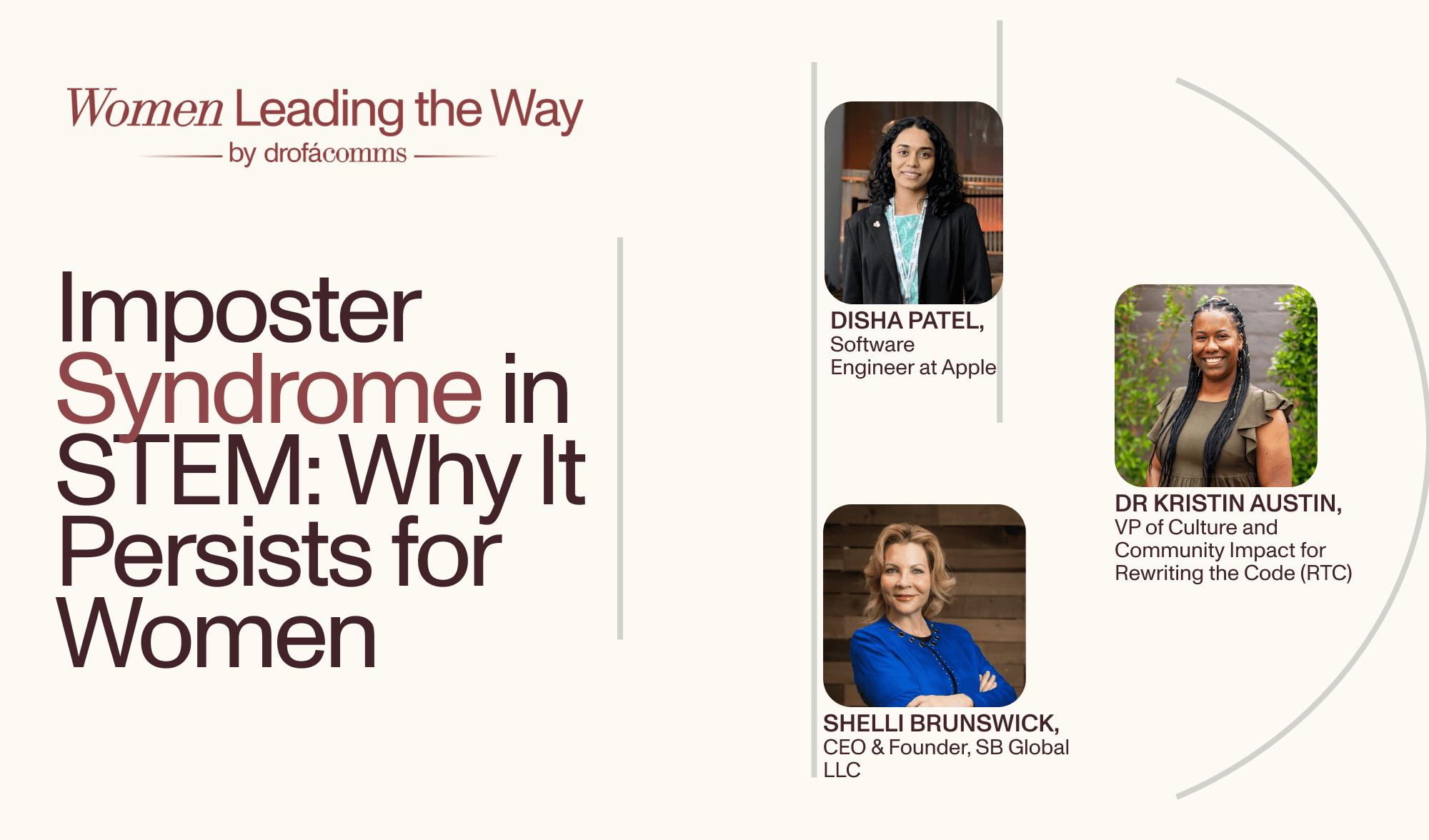
According to recent 2026 studies, 97.5% of women in STEM graduate programs still experience at least moderate feelings of imposter syndrome. This lack of proper mental perception can easily lead to burnouts and dropping out, as female workers regularly feel they do not deserve their success.
The number certainly feels staggering, but unfortunately, it also doesn’t come as entirely unexpected. For many women working in technical industries, it’s a familiar situation: they have to navigate fields where they are often outnumbered, heavily scrutinised, and expected to constantly prove themselves.
Under this kind of pressure, even accomplished professionals can struggle with the idea that they might not truly belong in the room. So what can be done to bridge this confidence gap?
The women who shared their stories with Women Leading the Way all highlight an important point: one of the biggest turning points in any woman’s career is learning to act without waiting for the industry to validate you first.
Silencing Self-Doubt With Successful Cases
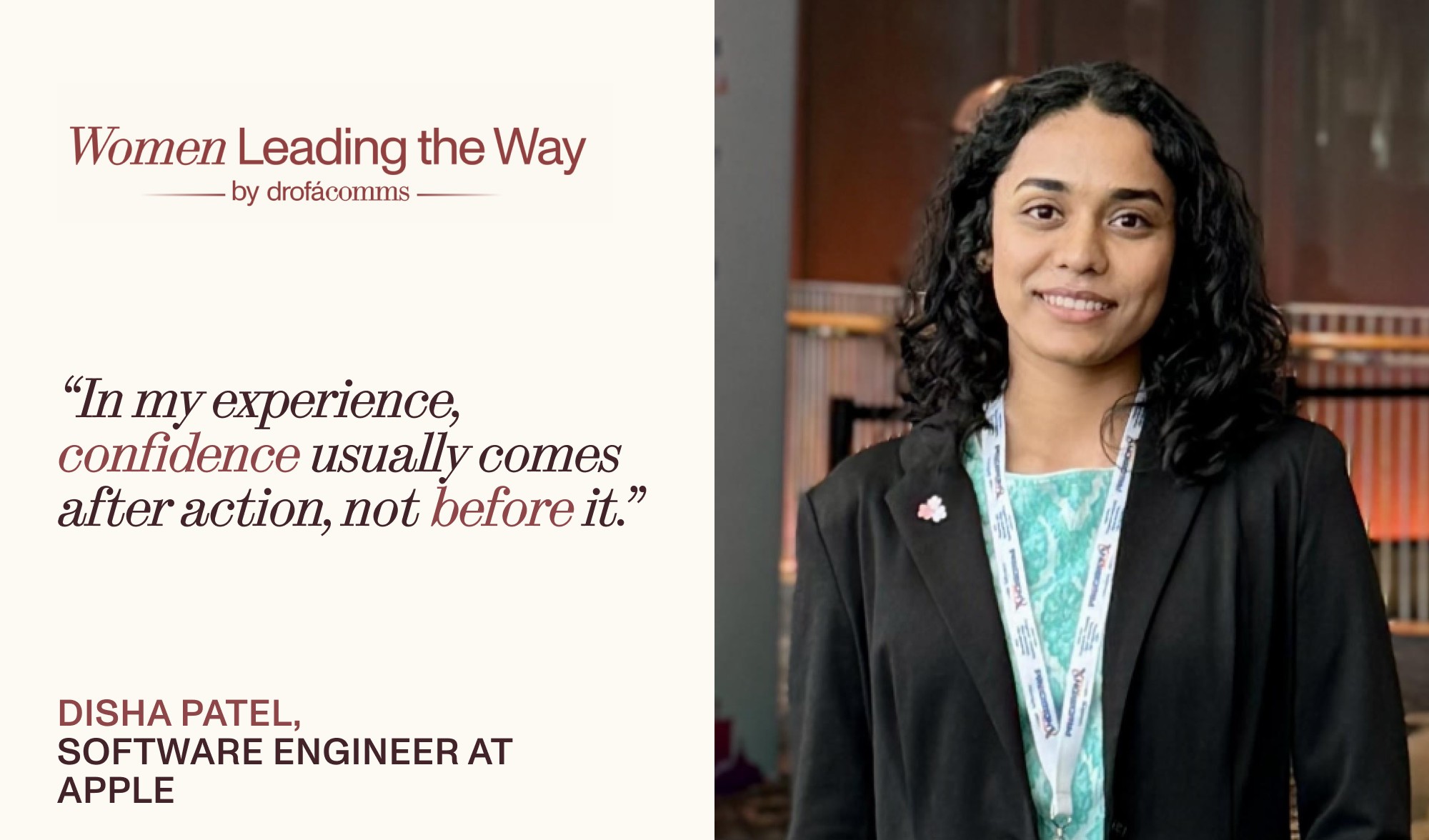
For Disha Patel, Software Engineer at Apple and former instructor for iOS development at California State University, the findings are not surprising at all. “I’ve experienced imposter syndrome at nearly every stage of my career,” she says.
What makes imposter syndrome particularly difficult is that it often exists alongside real achievements. Women may have the qualifications and the results to back up their claim, but even then, they struggle to feel fully confident in their place.
For Patel, overcoming such feelings came in the form of building what she describes as “tangible evidence” that she belonged in the room. Publishing research, teaching students, contributing to large-scale software systems — all of these steps gave her concrete proof that her skills were real.
According to Disha, women in STEM are also often conditioned to wait until they feel fully qualified before speaking up or pursuing opportunities, but she feels that this is a mistaken notion. “In my experience, confidence usually comes after action, not before it.”
Her experience certainly isn’t the only one of its kind. Opportunities often reward those who are bold enough to experiment, learn as they go, and stand in the public eye. And yet, many women still feel the pressure to obtain some arbitrary kind of “perfection” before they feel truly ready to push forward. As a result, many of those opportunities end up passing them by.
When Hesitation Becomes an Industry-Wide Issue
When female employees skip out on promising chances due to a lack of confidence, it can have a long-term impact: not only on their own careers but also on leadership pipelines in general.
Professionals who second-guess themselves early on are less likely to share ideas openly or apply for leadership roles. And if they don’t set a visible example for other women in the industry, then nothing feels like it can change.
Dr. Kristin Austin, VP of Culture and Community Impact for Rewriting the Code (RTC), has shared a stance that supports this line of thinking. She believes imposter syndrome should not be viewed simply as a matter of someone’s individual confidence. Rather, Austin sees it as a reflection of a larger, more profound issue — one that affects entire workplace systems and cultures.
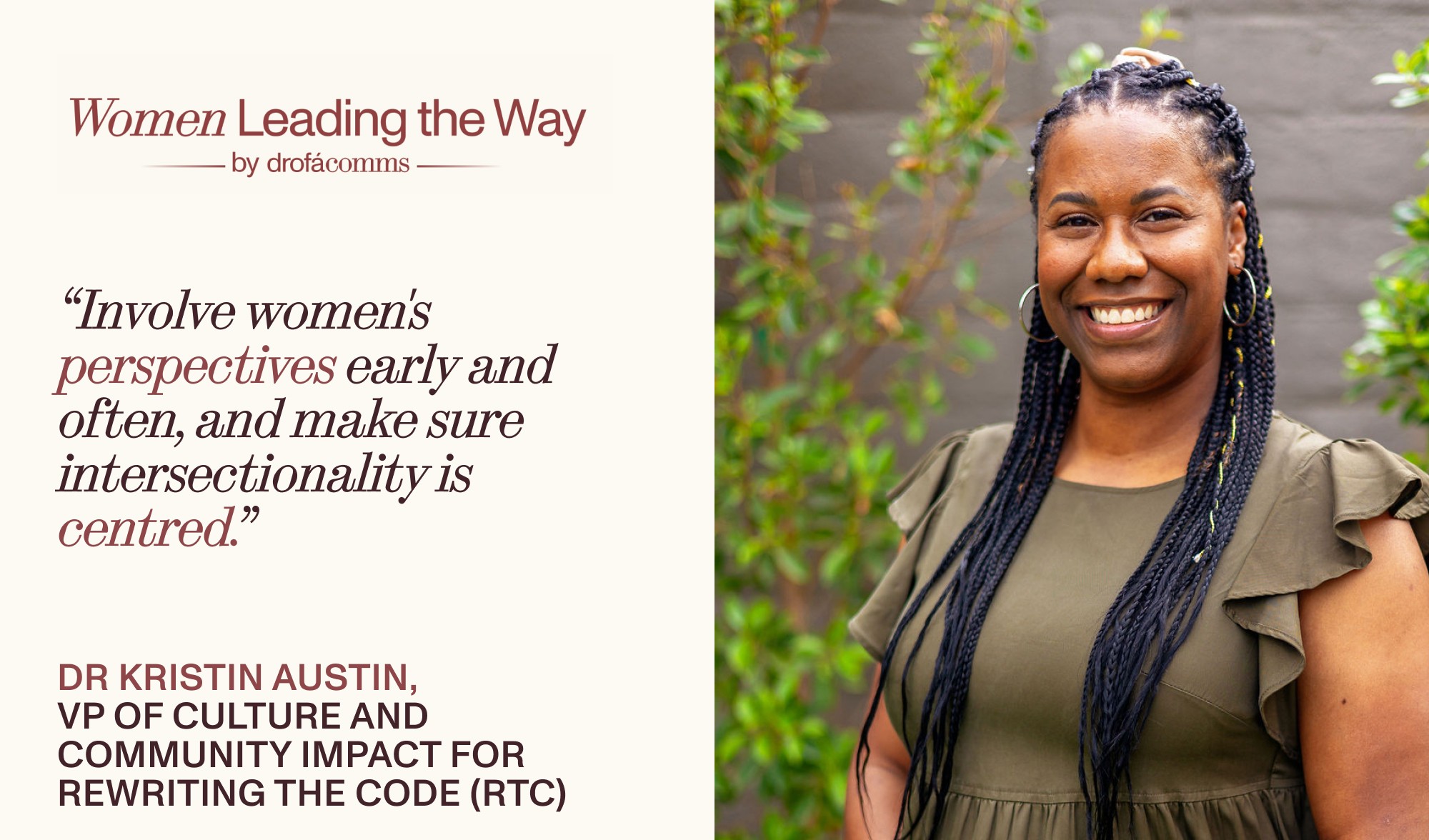
“Imposter syndrome is a direct way of saying there has been a systemic asphyxiation of women’s sense of confidence, autonomy, and agency in the workplace fueled by sexism, ageism, microaggressions, and pervasive discrimination,” she says. “Women have been socialised to doubt their power and performance.”
That said, Austin also points out that imposter syndrome is not limited to women alone. Many people who come from underrepresented or marginalised backgrounds can experience similar feelings. Especially when they work in environments that were not originally designed with them in mind.
The Role of Leadership in Changing Perception
Kristin continues her point by saying that people are more likely to show up and believe they can be someone important when they are invited to participate. When they feel that their existence is validated.
That idea has long-reaching implications for how company and industry leadership is supposed to work. Building confidence does not begin and end with simply encouraging individuals to “believe in themselves.” The greater task at hand is creating workspaces where people genuinely feel included, heard, and supported.
Austin believes direct managers, in particular, play a critical role here. They are usually the ones in just the right position to shine a spotlight on team members who may have otherwise been overlooked. And it falls to them to publicly recognise these people’s achievements and make sure opportunities are distributed equitably.
Creating such environments helps bolster not only individual confidence but also the growth of organisations on the whole, which is always a benefit in the business landscape. Even more so when we’re talking about high-paced and technologically heavy sectors.
Learning Through Discomfort
Shelli Brunswick, CEO & Founder of SB Global LLC and Secretary General of the WBAF Global Women Leaders Committee, has expressed a point of view on leadership that shares common ground with Austin’s.
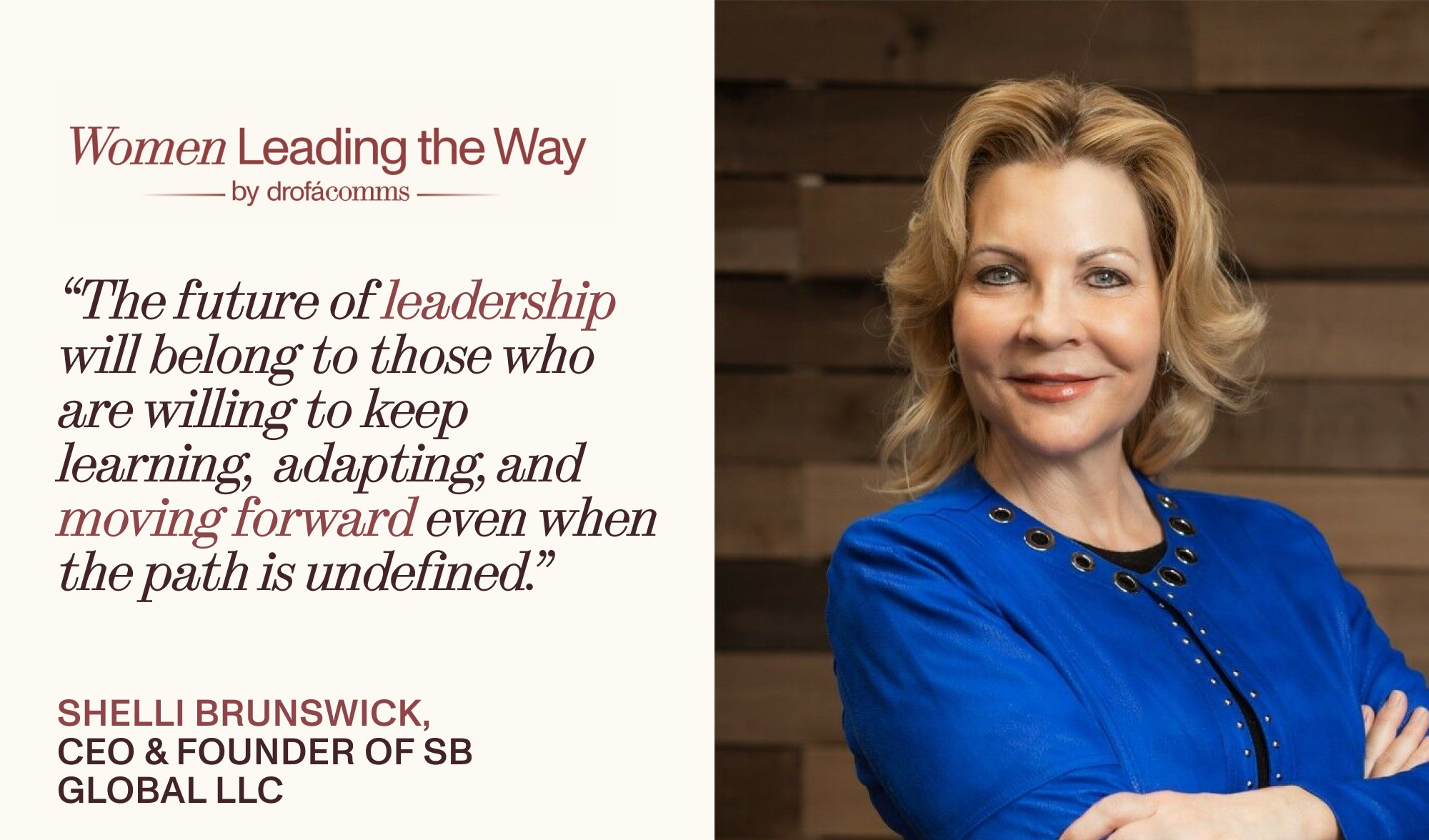
Brunswick has spent her career working across the global space ecosystem and emerging technologies. In her experience, uncertainty is part of innovation itself.
“Throughout my career, I have learned that many professionals experience moments of uncertainty when stepping into environments that demand innovation, adaptability, and continuous growth,” she says.
In sectors like AI, space, and advanced tech, people are constantly navigating unfamiliar territory, and no one has all the answers. As such, waiting to feel completely ready is unrealistic — leadership often requires you to push forward regardless. And that’s an issue that goes beyond women or men.
According to Shelli, what helped her in this regard was developing a “Space Mindset”: the ability to think beyond immediate limitations and continue learning in environments defined by complexity and change.
That kind of shift in perspective can be a powerful psychological tool for women entering STEM today. When they feel uncertain, instead of taking it as proof that they don’t belong, it can be seen as evidence that they are growing into something new.
Conclusion
The conversation around female inclusion, both in STEM and beyond it, has grown considerably over the years. But even so, data shows that these efforts are still not enough to truly do away with the imposter syndrome.
Creating truly supportive environments where women can overcome their doubts requires active leadership and a deeper change in workplace cultures. At the same time, it requires women themselves to keep “doing” despite their worries.
Disha Patel offers particularly direct advice for younger women entering STEM fields:
“Don’t wait to feel ‘ready.’ Apply for the role, publish the paper, ask the question, teach the class,” she says. “Imposter syndrome grows in silence and hesitation. Progress comes from participation.”
And perhaps that is indeed the most important takeaway. Confidence is not necessarily something that appears first and then leads you to action. More often, you build that confidence bit by bit through action itself — by showing up, contributing ideas, learning, and staying visible. And by pushing forward even when uncertain.
For many women in STEM, the true goal is not to completely eliminate self-doubt. It’s to stop letting it define what they believe they are capable of achieving.
Acknowledgements: Drofa Comms is thankful to Disha Patel, Dr. Kristin Austin, and Shelli Brunswick for contributing their expertise and perspectives to this Women Leading the Way article.
According to recent 2026 studies, 97.5% of women in STEM graduate programs still experience at least moderate feelings of imposter syndrome. This lack of proper mental perception can easily lead to burnouts and dropping out, as female workers regularly feel they do not deserve their success.
The number certainly feels staggering, but unfortunately, it also doesn’t come as entirely unexpected. For many women working in technical industries, it’s a familiar situation: they have to navigate fields where they are often outnumbered, heavily scrutinised, and expected to constantly prove themselves.
Under this kind of pressure, even accomplished professionals can struggle with the idea that they might not truly belong in the room. So what can be done to bridge this confidence gap?
The women who shared their stories with Women Leading the Way all highlight an important point: one of the biggest turning points in any woman’s career is learning to act without waiting for the industry to validate you first.
Silencing Self-Doubt With Successful Cases
For Disha Patel, Software Engineer at Apple and former instructor for iOS development at California State University, the findings are not surprising at all. “I’ve experienced imposter syndrome at nearly every stage of my career,” she says.
What makes imposter syndrome particularly difficult is that it often exists alongside real achievements. Women may have the qualifications and the results to back up their claim, but even then, they struggle to feel fully confident in their place.
For Patel, overcoming such feelings came in the form of building what she describes as “tangible evidence” that she belonged in the room. Publishing research, teaching students, contributing to large-scale software systems — all of these steps gave her concrete proof that her skills were real.
According to Disha, women in STEM are also often conditioned to wait until they feel fully qualified before speaking up or pursuing opportunities, but she feels that this is a mistaken notion. “In my experience, confidence usually comes after action, not before it.”
Her experience certainly isn’t the only one of its kind. Opportunities often reward those who are bold enough to experiment, learn as they go, and stand in the public eye. And yet, many women still feel the pressure to obtain some arbitrary kind of “perfection” before they feel truly ready to push forward. As a result, many of those opportunities end up passing them by.
When Hesitation Becomes an Industry-Wide Issue
When female employees skip out on promising chances due to a lack of confidence, it can have a long-term impact: not only on their own careers but also on leadership pipelines in general.
Professionals who second-guess themselves early on are less likely to share ideas openly or apply for leadership roles. And if they don’t set a visible example for other women in the industry, then nothing feels like it can change.
Dr. Kristin Austin, VP of Culture and Community Impact for Rewriting the Code (RTC), has shared a stance that supports this line of thinking. She believes imposter syndrome should not be viewed simply as a matter of someone’s individual confidence. Rather, Austin sees it as a reflection of a larger, more profound issue — one that affects entire workplace systems and cultures.
“Imposter syndrome is a direct way of saying there has been a systemic asphyxiation of women’s sense of confidence, autonomy, and agency in the workplace fueled by sexism, ageism, microaggressions, and pervasive discrimination,” she says. “Women have been socialised to doubt their power and performance.”
That said, Austin also points out that imposter syndrome is not limited to women alone. Many people who come from underrepresented or marginalised backgrounds can experience similar feelings. Especially when they work in environments that were not originally designed with them in mind.
The Role of Leadership in Changing Perception
Kristin continues her point by saying that people are more likely to show up and believe they can be someone important when they are invited to participate. When they feel that their existence is validated.
That idea has long-reaching implications for how company and industry leadership is supposed to work. Building confidence does not begin and end with simply encouraging individuals to “believe in themselves.” The greater task at hand is creating workspaces where people genuinely feel included, heard, and supported.
Austin believes direct managers, in particular, play a critical role here. They are usually the ones in just the right position to shine a spotlight on team members who may have otherwise been overlooked. And it falls to them to publicly recognise these people’s achievements and make sure opportunities are distributed equitably.
Creating such environments helps bolster not only individual confidence but also the growth of organisations on the whole, which is always a benefit in the business landscape. Even more so when we’re talking about high-paced and technologically heavy sectors.
Learning Through Discomfort
Shelli Brunswick, CEO & Founder of SB Global LLC and Secretary General of the WBAF Global Women Leaders Committee, has expressed a point of view on leadership that shares common ground with Austin’s.
Brunswick has spent her career working across the global space ecosystem and emerging technologies. In her experience, uncertainty is part of innovation itself.
“Throughout my career, I have learned that many professionals experience moments of uncertainty when stepping into environments that demand innovation, adaptability, and continuous growth,” she says.
In sectors like AI, space, and advanced tech, people are constantly navigating unfamiliar territory, and no one has all the answers. As such, waiting to feel completely ready is unrealistic — leadership often requires you to push forward regardless. And that’s an issue that goes beyond women or men.
According to Shelli, what helped her in this regard was developing a “Space Mindset”: the ability to think beyond immediate limitations and continue learning in environments defined by complexity and change.
That kind of shift in perspective can be a powerful psychological tool for women entering STEM today. When they feel uncertain, instead of taking it as proof that they don’t belong, it can be seen as evidence that they are growing into something new.
Conclusion
The conversation around female inclusion, both in STEM and beyond it, has grown considerably over the years. But even so, data shows that these efforts are still not enough to truly do away with the imposter syndrome.
Creating truly supportive environments where women can overcome their doubts requires active leadership and a deeper change in workplace cultures. At the same time, it requires women themselves to keep “doing” despite their worries.
Disha Patel offers particularly direct advice for younger women entering STEM fields:
“Don’t wait to feel ‘ready.’ Apply for the role, publish the paper, ask the question, teach the class,” she says. “Imposter syndrome grows in silence and hesitation. Progress comes from participation.”
And perhaps that is indeed the most important takeaway. Confidence is not necessarily something that appears first and then leads you to action. More often, you build that confidence bit by bit through action itself — by showing up, contributing ideas, learning, and staying visible. And by pushing forward even when uncertain.
For many women in STEM, the true goal is not to completely eliminate self-doubt. It’s to stop letting it define what they believe they are capable of achieving.
Acknowledgements: Drofa Comms is thankful to Disha Patel, Dr. Kristin Austin, and Shelli Brunswick for contributing their expertise and perspectives to this Women Leading the Way article.
London office
Rise, created by Barclays, 41 Luke St, London EC2A 4DP
Nicosia office
2043, Nikokreontos 29, office 202
DP FINANCE COMM LTD (#13523955) Registered Address: N1 7GU, 20-22 Wenlock Road, London, United Kingdom For Operations In The UK
AGAFIYA CONSULTING LTD (#HE 380737) Registered Address: 2043, Nikokreontos 29, Flat 202, Strovolos, Cyprus For Operations In The EU, LATAM, United Stated Of America And Provision Of Services Worldwide
Drofa © 2024
London office
Rise, created by Barclays, 41 Luke St, London EC2A 4DP
Nicosia office
2043, Nikokreontos 29, office 202
DP FINANCE COMM LTD (#13523955) Registered Address: N1 7GU, 20-22 Wenlock Road, London, United Kingdom For Operations In The UK
AGAFIYA CONSULTING LTD (#HE 380737) Registered Address: 2043, Nikokreontos 29, Flat 202, Strovolos, Cyprus For Operations In The EU, LATAM, United Stated Of America And Provision Of Services Worldwide
Drofa © 2024
