NEWS
NEWS
AI, Women in Finance, and the Future of Leadership Pipelines: 2026 Outlook
AI, Women in Finance, and the Future of Leadership Pipelines: 2026 Outlook

In 2026, AI has taken firm root in daily life, and in finance — an industry that quickly adopts new tools — this is especially noticeable. While it improves efficiency and removes routine work, the speed of adoption simultaneously creates real risks. One of the most overlooked of them is how AI influences career development, or, more precisely, how differently it affects men and women.
A recent City of London Corporation report warns that women face a higher risk of AI-driven job displacement than men. It states that around 119,000 clerical roles could be automated over the next decade, which are exactly positions held primarily by women. In this situation, women risk losing a route into leadership, valuable connections, and the chance to grow professionally.
So does this mean women will be inevitably displaced in the near future, or are there ways to prevent this?
To answer this question, Drofa Comms spoke with women leaders as part of our Women Leading the Way initiative. We asked how they see AI reshaping the path into leadership, and what organisations should do now to prevent this risk from becoming unavoidable.
How AI Is Changing Career Paths in Finance for Women
As a matter of fact, AI is already redefining career paths in finance, and at first glance, it seems hard to avoid. Instead of speaking in general terms, we asked senior professionals where exactly they see career paths changing — and they pinpointed four recurring changes.
Change #1: AI hiring can filter women out at the first stage
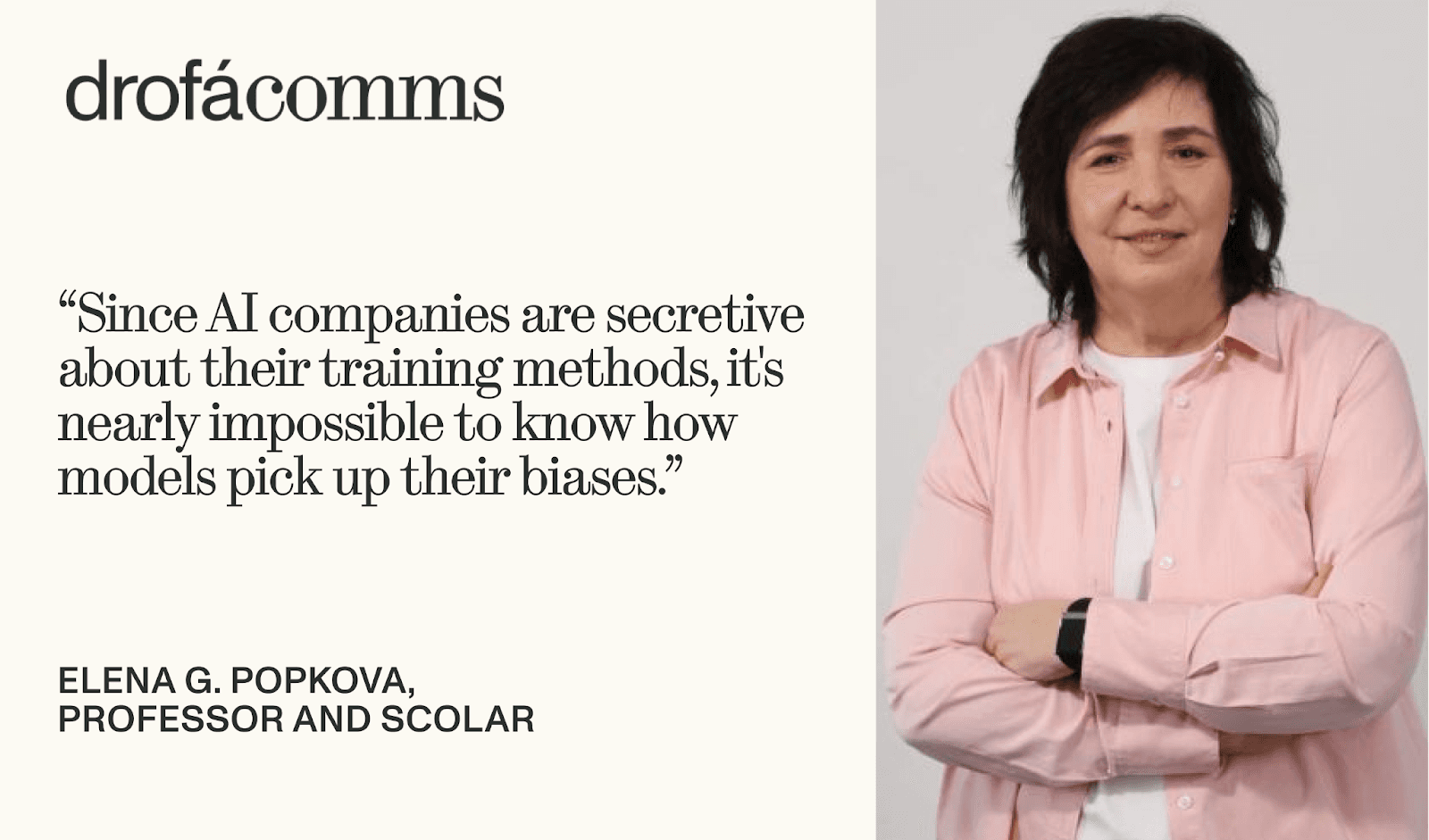
Elena G. Popkova, a professor and scholar specialising in sustainable technologies, points to where the problem can start, before any recruiter even looks at your CV. Today, many companies use AI to screen applications, build candidate profiles, and rank applicants. That means career progression can be affected at the very first step, when women are getting into the process.
If the system reflects stereotypes or downgrades candidates for having a gap in their work history, a qualified candidate may never reach the human stage of hiring at all. And career gaps are far more common among women — by social default. In most societies, it is still women who are expected to take parental leave, while paternity leave is unavailable in many countries, or simply unused. Even where men have the legal right to take extended leave, they rarely do. So the door for women can close before anyone even opens it.
Change #2: Compliance and client support roles are disappearing
Even if a woman gets past the hiring screen, that still doesn't guarantee a smooth path. Noor Al-Naseri, a compliance expert with nearly 20 years of experience in finance, points out that many women start their careers in compliance or client support. These are the very roles where they learn how the business works, build relationships, and earn trust step by step.
But in her view, AI is already taking over a growing share of the day-to-day work in these roles — flagging regulatory issues, handling client queries, processing documentation. If that continues, the positions that have long served as a real entry point into senior and client-facing roles in finance may shrink sharply — or disappear altogether.
Change #3: Automated mid-level roles cut the path to leadership
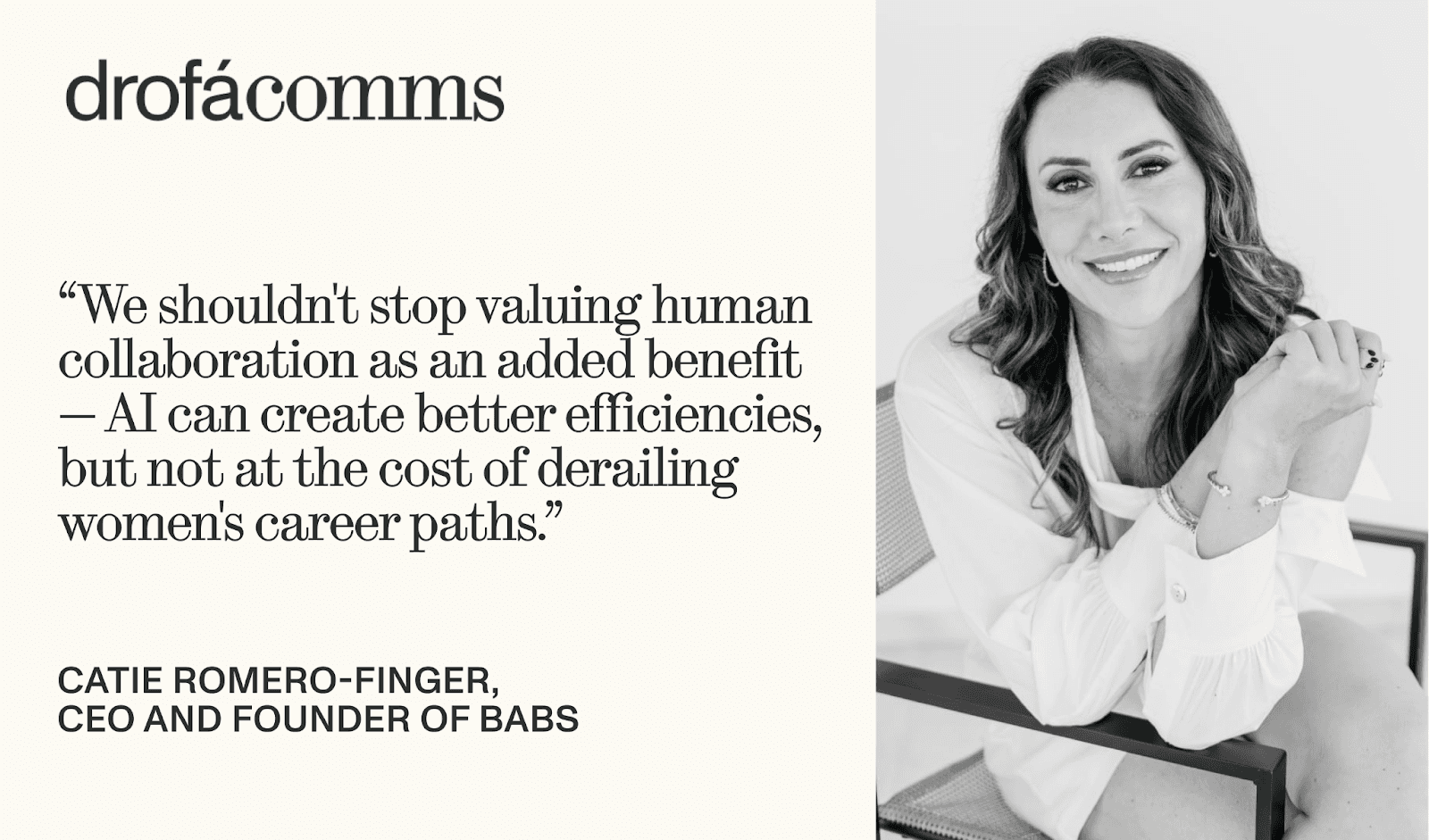
When a woman finally reaches the mid-level, automation can still catch up with her. As Catie Romero-Finger, the CEO and Founder of BABs, notes, mid-level roles — analysts, team leads, and operations managers — are often the primary target for AI rollout. These are positions built around processing data, coordinating workflows, and managing routine decisions — exactly the kind of repeatable work that AI handles well.
And the problem is that this is also the stage where the path to leadership for women typically opens. Mid-level roles are where people gain visibility, manage teams for the first time, and prove they are ready for the next step.
If AI replaces parts of that work and shrinks the number of these roles, the path upward becomes narrower and harder. Fewer available mid-level roles means fewer chances to build visibility, prove management skills, and move up the career ladder.
Change #4: Good results are no longer enough
Suneera Madhani, Founder of Worth AI and former Founder and CEO of Stax Payments, argues that in the past, many people could grow through good results. They did their job well, took on more tasks, led projects, and, over time, got promoted.
Yet, today, this path is changing with AI because part of the “execution” work is being automated. So it becomes harder to stand out and prove you are ready for the next step only through good results.
Together, these four views show that AI nowadays reduces visibility, limits chances to lead, and slows advancement for women in finance. The impact looks different at each career stage, which makes it easy to miss the shift. Still, if we can name the problem, can we also fix it?
What Organisations Should Do Now to Prevent AI Displacement
The solution starts at the very beginning of the pipeline: making AI hiring tools auditable and bias-free.
Elena G. Popkova argues that this means actively testing AI hiring tools for bias. In her view, companies should use training data that reflects diverse career paths, demographic backgrounds, and employment histories, including non-linear ones. They should also bring people from different teams to test the tool before deployment and decide whether to approve it or reject it. If checks show unfair results, both the model and the hiring process need to be changed.
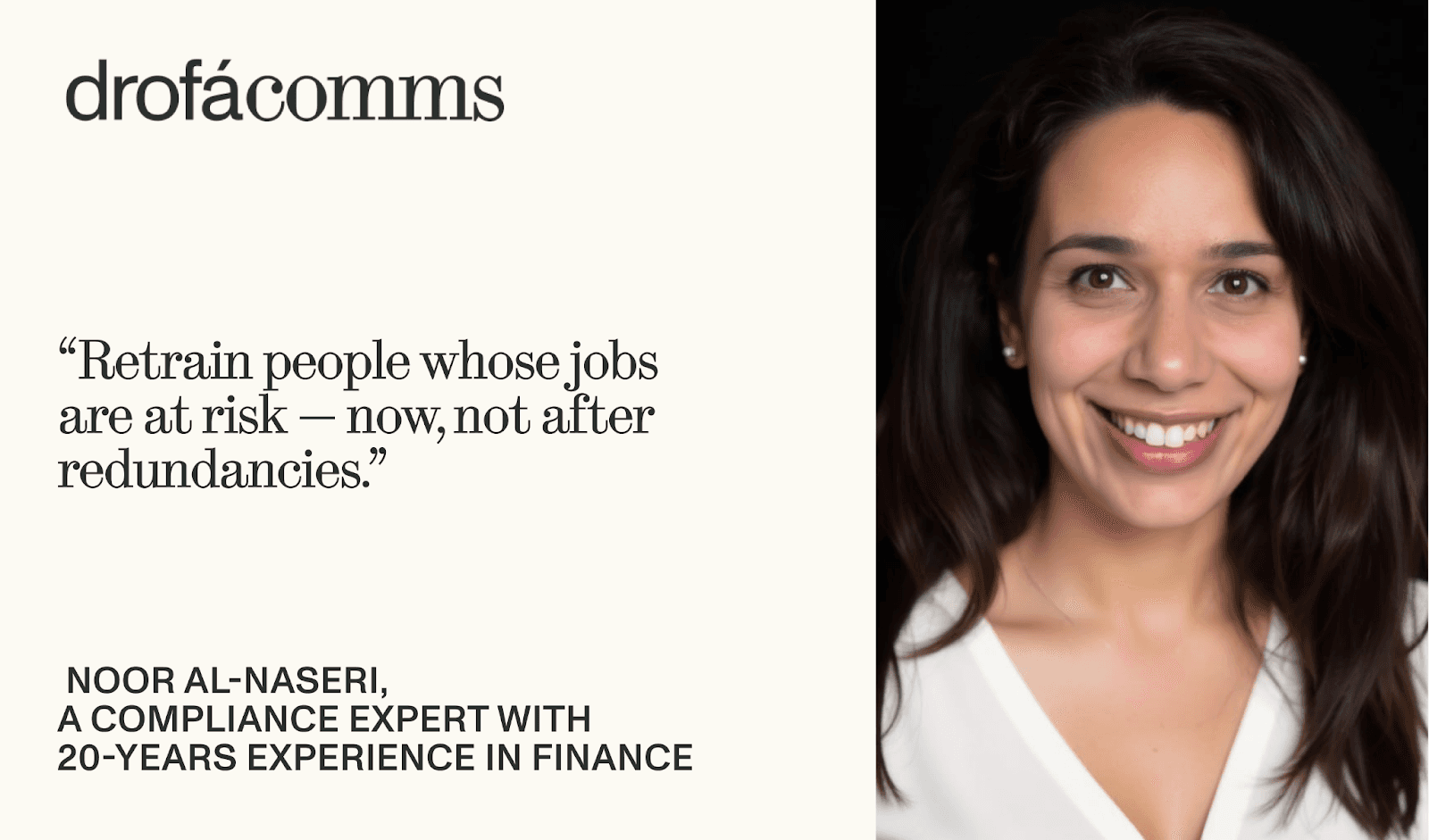
But what about positions in compliance and client services? Noor Al-Naseri's answer is to retrain women in these roles now, while they are still in them, and redesign the jobs so AI augments the work rather than replaces it. That means keeping the relationship-building, judgement-driven, and advisory parts of the role intact — the parts that AI cannot replicate.
Catie Romero-Finger, who warns about heavy automation of the mid-level layer, says the fix is to use AI to remove administrative tasks, yet keep enough mid-level roles and redesign them around real responsibilities. They include leading key projects, managing people, and handling complex decisions and crises. The goal is to preserve the developmental value of these roles, not just their headcount.
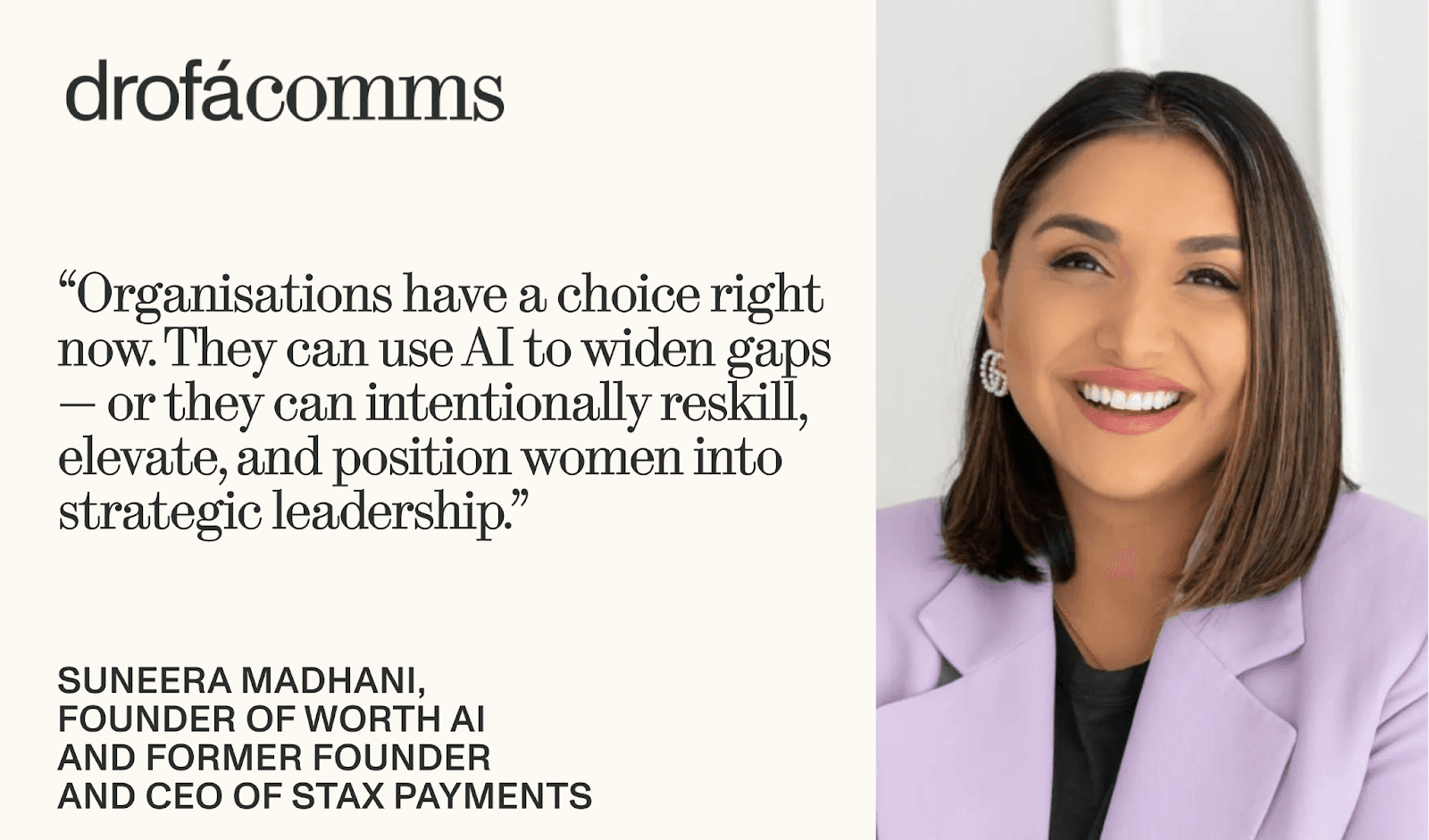
Ultimately, companies need to bring women closer to decision-making — and do it as early as possible. This is what Suneera Madhani advises. She says women should be included in AI governance and oversight, tool selection, and policy setting. This ensures they are shaping the outcomes, instead of being a subject to them.
Conclusion
After reviewing how AI is already reshaping women's career paths in finance, and what organisations can do to prevent over-automation, we can confidently say — displacement is not inevitable.
At Drofa Comms, we believe the most important step is to redesign roles so that AI removes routine work while women retain the visibility, responsibilities, and relationships needed to progress. Done this way, the risk of displacement significantly decreases — if not disappears entirely.
Acknowledgements: Drofa Comms is thankful to Elena G. Popkova, Noor Al-Naseri, Catie Romero-Finger, and Suneera Madhani for lending their expertise to this Women Leading the Way article.
In 2026, AI has taken firm root in daily life, and in finance — an industry that quickly adopts new tools — this is especially noticeable. While it improves efficiency and removes routine work, the speed of adoption simultaneously creates real risks. One of the most overlooked of them is how AI influences career development, or, more precisely, how differently it affects men and women.
A recent City of London Corporation report warns that women face a higher risk of AI-driven job displacement than men. It states that around 119,000 clerical roles could be automated over the next decade, which are exactly positions held primarily by women. In this situation, women risk losing a route into leadership, valuable connections, and the chance to grow professionally.
So does this mean women will be inevitably displaced in the near future, or are there ways to prevent this?
To answer this question, Drofa Comms spoke with women leaders as part of our Women Leading the Way initiative. We asked how they see AI reshaping the path into leadership, and what organisations should do now to prevent this risk from becoming unavoidable.
How AI Is Changing Career Paths in Finance for Women
As a matter of fact, AI is already redefining career paths in finance, and at first glance, it seems hard to avoid. Instead of speaking in general terms, we asked senior professionals where exactly they see career paths changing — and they pinpointed four recurring changes.
Change #1: AI hiring can filter women out at the first stage
Elena G. Popkova, a professor and scholar specialising in sustainable technologies, points to where the problem can start, before any recruiter even looks at your CV. Today, many companies use AI to screen applications, build candidate profiles, and rank applicants. That means career progression can be affected at the very first step, when women are getting into the process.
If the system reflects stereotypes or downgrades candidates for having a gap in their work history, a qualified candidate may never reach the human stage of hiring at all. And career gaps are far more common among women — by social default. In most societies, it is still women who are expected to take parental leave, while paternity leave is unavailable in many countries, or simply unused. Even where men have the legal right to take extended leave, they rarely do. So the door for women can close before anyone even opens it.
Change #2: Compliance and client support roles are disappearing
Even if a woman gets past the hiring screen, that still doesn't guarantee a smooth path. Noor Al-Naseri, a compliance expert with nearly 20 years of experience in finance, points out that many women start their careers in compliance or client support. These are the very roles where they learn how the business works, build relationships, and earn trust step by step.
But in her view, AI is already taking over a growing share of the day-to-day work in these roles — flagging regulatory issues, handling client queries, processing documentation. If that continues, the positions that have long served as a real entry point into senior and client-facing roles in finance may shrink sharply — or disappear altogether.
Change #3: Automated mid-level roles cut the path to leadership
When a woman finally reaches the mid-level, automation can still catch up with her. As Catie Romero-Finger, the CEO and Founder of BABs, notes, mid-level roles — analysts, team leads, and operations managers — are often the primary target for AI rollout. These are positions built around processing data, coordinating workflows, and managing routine decisions — exactly the kind of repeatable work that AI handles well.
And the problem is that this is also the stage where the path to leadership for women typically opens. Mid-level roles are where people gain visibility, manage teams for the first time, and prove they are ready for the next step.
If AI replaces parts of that work and shrinks the number of these roles, the path upward becomes narrower and harder. Fewer available mid-level roles means fewer chances to build visibility, prove management skills, and move up the career ladder.
Change #4: Good results are no longer enough
Suneera Madhani, Founder of Worth AI and former Founder and CEO of Stax Payments, argues that in the past, many people could grow through good results. They did their job well, took on more tasks, led projects, and, over time, got promoted.
Yet, today, this path is changing with AI because part of the “execution” work is being automated. So it becomes harder to stand out and prove you are ready for the next step only through good results.
Together, these four views show that AI nowadays reduces visibility, limits chances to lead, and slows advancement for women in finance. The impact looks different at each career stage, which makes it easy to miss the shift. Still, if we can name the problem, can we also fix it?
What Organisations Should Do Now to Prevent AI Displacement
The solution starts at the very beginning of the pipeline: making AI hiring tools auditable and bias-free.
Elena G. Popkova argues that this means actively testing AI hiring tools for bias. In her view, companies should use training data that reflects diverse career paths, demographic backgrounds, and employment histories, including non-linear ones. They should also bring people from different teams to test the tool before deployment and decide whether to approve it or reject it. If checks show unfair results, both the model and the hiring process need to be changed.
But what about positions in compliance and client services? Noor Al-Naseri's answer is to retrain women in these roles now, while they are still in them, and redesign the jobs so AI augments the work rather than replaces it. That means keeping the relationship-building, judgement-driven, and advisory parts of the role intact — the parts that AI cannot replicate.
Catie Romero-Finger, who warns about heavy automation of the mid-level layer, says the fix is to use AI to remove administrative tasks, yet keep enough mid-level roles and redesign them around real responsibilities. They include leading key projects, managing people, and handling complex decisions and crises. The goal is to preserve the developmental value of these roles, not just their headcount.
Ultimately, companies need to bring women closer to decision-making — and do it as early as possible. This is what Suneera Madhani advises. She says women should be included in AI governance and oversight, tool selection, and policy setting. This ensures they are shaping the outcomes, instead of being a subject to them.
Conclusion
After reviewing how AI is already reshaping women's career paths in finance, and what organisations can do to prevent over-automation, we can confidently say — displacement is not inevitable.
At Drofa Comms, we believe the most important step is to redesign roles so that AI removes routine work while women retain the visibility, responsibilities, and relationships needed to progress. Done this way, the risk of displacement significantly decreases — if not disappears entirely.
Acknowledgements: Drofa Comms is thankful to Elena G. Popkova, Noor Al-Naseri, Catie Romero-Finger, and Suneera Madhani for lending their expertise to this Women Leading the Way article.
London office
Rise, created by Barclays, 41 Luke St, London EC2A 4DP
Nicosia office
2043, Nikokreontos 29, office 202
DP FINANCE COMM LTD (#13523955) Registered Address: N1 7GU, 20-22 Wenlock Road, London, United Kingdom For Operations In The UK
AGAFIYA CONSULTING LTD (#HE 380737) Registered Address: 2043, Nikokreontos 29, Flat 202, Strovolos, Cyprus For Operations In The EU, LATAM, United Stated Of America And Provision Of Services Worldwide
Drofa © 2024
London office
Rise, created by Barclays, 41 Luke St, London EC2A 4DP
Nicosia office
2043, Nikokreontos 29, office 202
DP FINANCE COMM LTD (#13523955) Registered Address: N1 7GU, 20-22 Wenlock Road, London, United Kingdom For Operations In The UK
AGAFIYA CONSULTING LTD (#HE 380737) Registered Address: 2043, Nikokreontos 29, Flat 202, Strovolos, Cyprus For Operations In The EU, LATAM, United Stated Of America And Provision Of Services Worldwide
Drofa © 2024
