NEWS
NEWS
AI Layoffs: What Female Leaders Are Seeing Next in Fintech Hiring
AI Layoffs: What Female Leaders Are Seeing Next in Fintech Hiring

After years of aggressive hiring, many financial and fintech companies are now restructuring teams and leaning heavily into AI-powered operations. Since 2024, firms across banking, payments, crypto, and financial software have announced rounds of layoffs while at the same time, they kept increasing investment in generative AI tools and automation systems.
According to McKinsey & Company, generative AI could automate work activities that currently take up to 70% of employees’ time in some business functions. Meanwhile, other research has estimated that AI could impact hundreds of millions of jobs globally, particularly roles built around repetitive administrative and analytical tasks.
But despite the headlines, industry leaders say the story is more complicated than “AI replacing humans.” Instead, they believe fintech is undergoing a deeper redesign.
To understand where we are heading next, the Drofa Comms team spoke with female leaders across fintech, AI, and technology about what these changes really mean.
Leaner Teams But Faster Execution
One of the clearest themes actively discussed across the industry is that AI is reducing the need for large operational structures.
Alexandra Hayes, Generative AI & SaaS GTM Consultant and AI Product Strategist at Audio Cleaner, believes the biggest transformation will not necessarily be smaller companies, but companies built around faster execution.
According to Hayes, tasks that previously required multiple operational layers, including reporting, onboarding, workflow management, compliance support, and customer communication, can increasingly be assisted by AI systems.
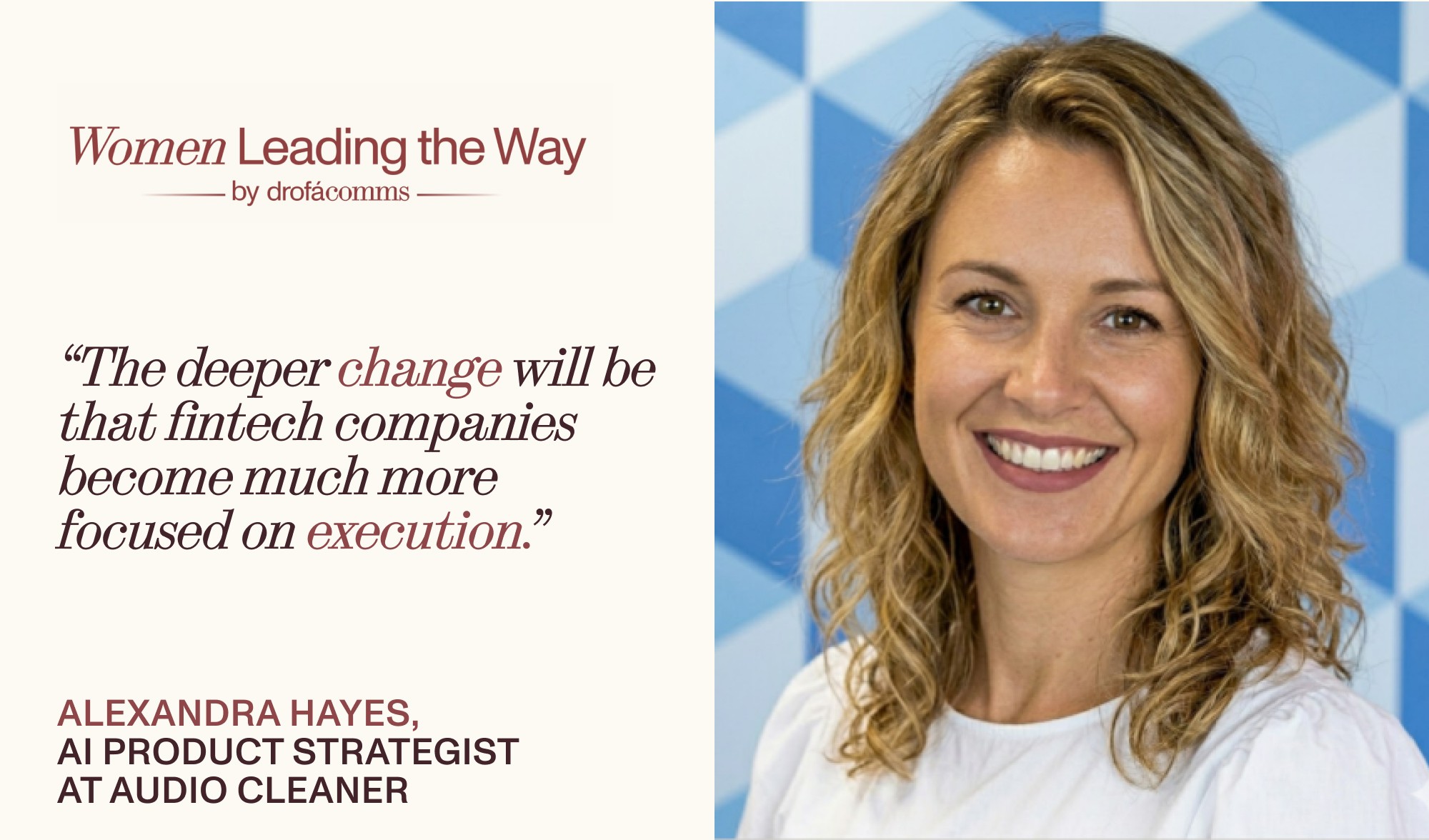
“The deeper change will be that fintech companies become much more focused on execution,” she explains. Rather than relying on highly segmented departments, fintech firms are likely to favour adaptable employees who can move quickly between different functions.
Hayes believes the more successful employees in the future will not be the most skilled in their specialisation, but rather those who understand AI, possess the skills to function across a variety of roles, and can move from idea to full execution.
Human Judgment Is Becoming More Valuable
While AI is automating many repetitive functions, leaders also point out that automation does not remove the need for human oversight.
Mona Rajhans, Senior Engineering Manager at Palo Alto Networks, argues that AI is fundamentally changing what fintech companies consider valuable work.
“A few years ago, growth meant adding more engineers, analysts, and operations teams,” she says. “Now a smaller team using AI effectively can often move faster than a much larger team could before.”
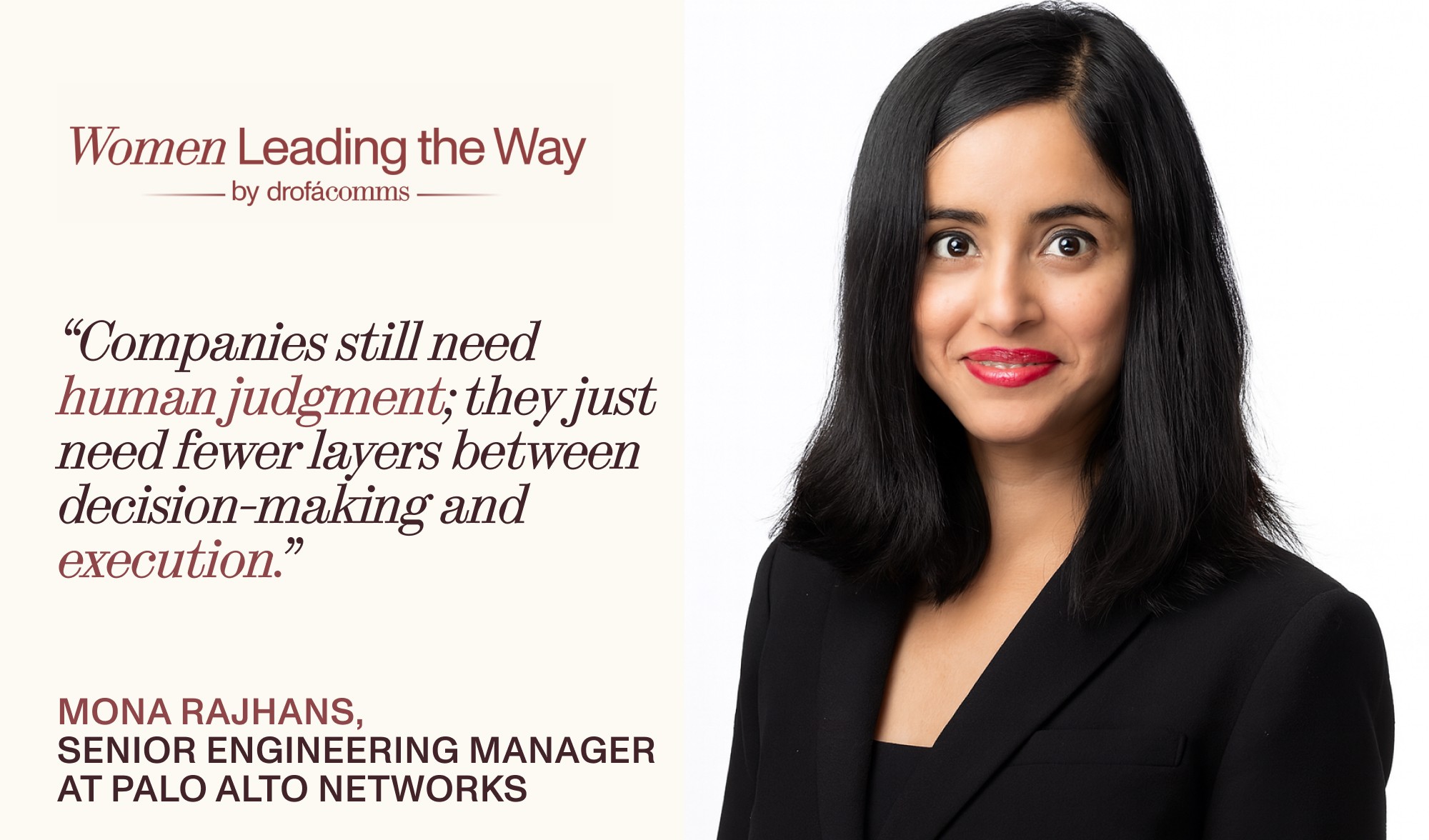
“Companies still need human judgment; they just need fewer layers between decision-making and execution." Rajhans notes that the roles most vulnerable to compression are often those built around repetitive execution rather than decision-making or problem-solving.
“In many cases, it’s doing the opposite,” she explains. “The people becoming more valuable are the ones who can combine technical fluency with communication, business context, and critical thinking.”
As AI models become cheaper and more widely accessible, Rajhans expects the competitive advantage to shift away from simple tool usage and toward the ability to ask stronger questions and solve ambiguous problems.
Our CEO at Drofa Comms, Valentina Drofa, also agrees with this point. In her latest article for Forbes, she discusses the idea that AI indeed becomes a powerful assistant. But it is important that the direction is always given by thinking people.
“People making decisions are the most powerful resource that businesses need right now. I'm actively trying to cultivate them in my team as well,” says Valentina.
The Traditional Career Ladder Is Changing
But in all this AI rush, there is still one concern, raised by industry leaders. The thing is, what does the invention of AI mean for early-career professionals?
Lacey Kaelani, CEO of Metaintro, argues that AI is not necessarily replacing jobs outright, but making many traditional entry-level responsibilities less distinctive.
Tasks that once helped junior fintech employees build foundational experience are increasingly being absorbed by AI agents and copilots. “Our data shows a significant change,” she explains. “Fintech postings are becoming much more senior, with limited progression for analysts and associates year-over-year.”
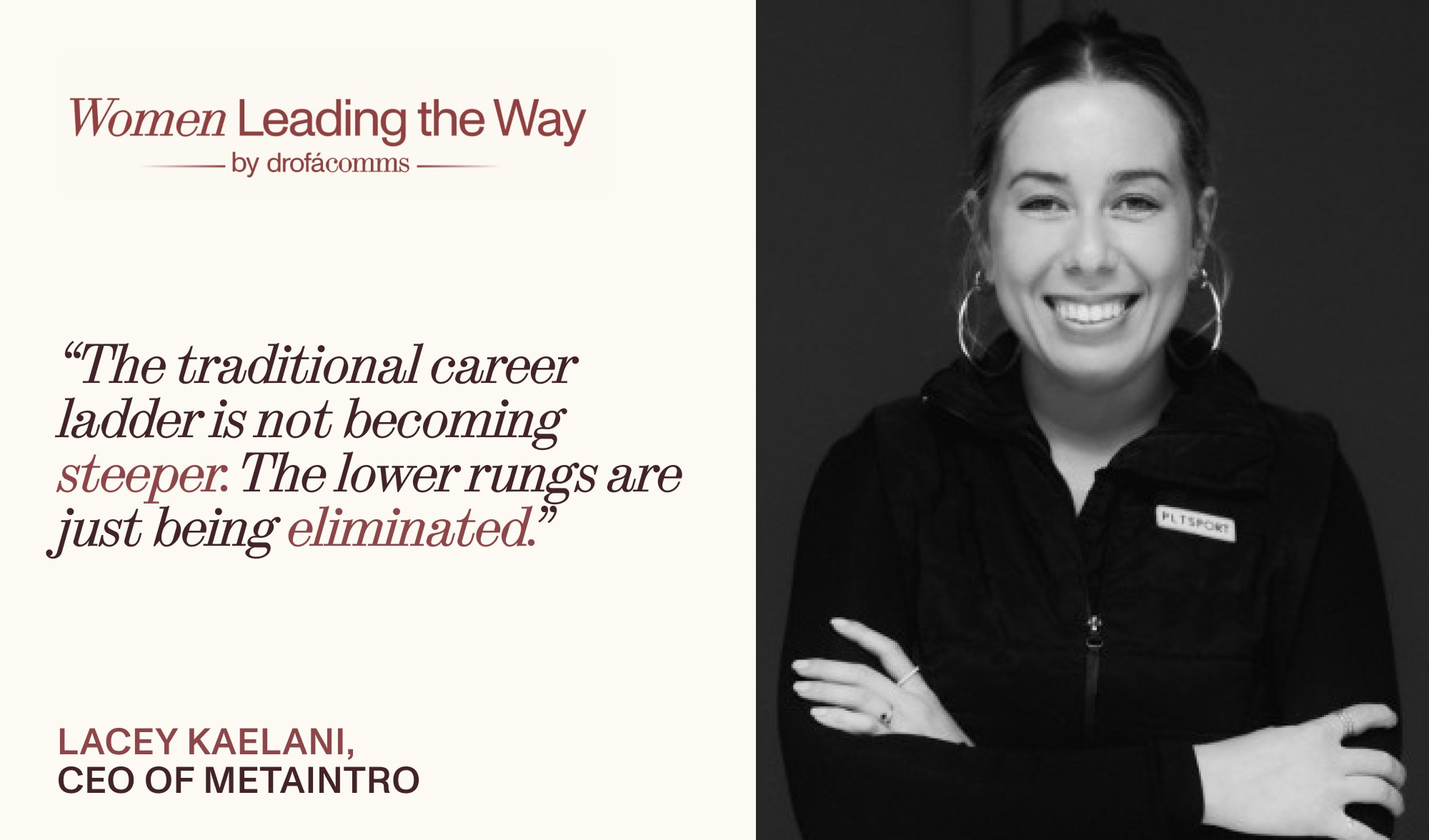
The traditional career ladder is not becoming steeper. The lower rungs are being eliminated. In other words, the traditional ladder is not becoming steeper; the lower rungs are disappearing.
That creates a difficult reality for younger professionals entering the industry today, particularly those expecting traditional analyst pathways to provide long-term progression. If the industry is left with only seniors and team leads, who will be the next generation?
Networking May Matter More Than Ever
In this new AI reality, one of the more surprising themes emerging from the conversation is the renewed importance of human relationships.
Experts believe that professionals who build strong networks outside their organisations will have a major advantage during periods of restructuring. “The people who survive the cuts at fintech start-ups will be the ones who find their next roles through a warm intro rather than needing to apply,” says Kaelani.
Research shows that referrals and existing professional networks remain among the strongest predictors of successful hiring outcomes, particularly during uncertain labour markets. Although recommendations account for only 7% of applications, they make up 40% of all hired candidates and have the highest conversion rate of “application → hire.”
So, in a world predominantly shaped by automation, trust and relationships may become even more valuable.
Conclusion
The current wave of fintech layoffs means something much bigger than cost-cutting. AI is fundamentally reshaping how fintech companies build teams.
But while AI is reducing demand for some traditional roles, it is also increasing demand for skills that remain uniquely human: judgment, adaptability, communication, accountability, and strategic thinking.
For early-career professionals, this moment is the exact time to learn how to work alongside AI in ways that create irreplaceable value.
Drofa Comms is thankful to Alexandra Hayes, Mona Rajhans, and Lacey Kaelani for contributing their expertise to this Women Leading the Way article.
After years of aggressive hiring, many financial and fintech companies are now restructuring teams and leaning heavily into AI-powered operations. Since 2024, firms across banking, payments, crypto, and financial software have announced rounds of layoffs while at the same time, they kept increasing investment in generative AI tools and automation systems.
According to McKinsey & Company, generative AI could automate work activities that currently take up to 70% of employees’ time in some business functions. Meanwhile, other research has estimated that AI could impact hundreds of millions of jobs globally, particularly roles built around repetitive administrative and analytical tasks.
But despite the headlines, industry leaders say the story is more complicated than “AI replacing humans.” Instead, they believe fintech is undergoing a deeper redesign.
To understand where we are heading next, the Drofa Comms team spoke with female leaders across fintech, AI, and technology about what these changes really mean.
Leaner Teams But Faster Execution
One of the clearest themes actively discussed across the industry is that AI is reducing the need for large operational structures.
Alexandra Hayes, Generative AI & SaaS GTM Consultant and AI Product Strategist at Audio Cleaner, believes the biggest transformation will not necessarily be smaller companies, but companies built around faster execution.
According to Hayes, tasks that previously required multiple operational layers, including reporting, onboarding, workflow management, compliance support, and customer communication, can increasingly be assisted by AI systems.
“The deeper change will be that fintech companies become much more focused on execution,” she explains. Rather than relying on highly segmented departments, fintech firms are likely to favour adaptable employees who can move quickly between different functions.
Hayes believes the more successful employees in the future will not be the most skilled in their specialisation, but rather those who understand AI, possess the skills to function across a variety of roles, and can move from idea to full execution.
Human Judgment Is Becoming More Valuable
While AI is automating many repetitive functions, leaders also point out that automation does not remove the need for human oversight.
Mona Rajhans, Senior Engineering Manager at Palo Alto Networks, argues that AI is fundamentally changing what fintech companies consider valuable work.
“A few years ago, growth meant adding more engineers, analysts, and operations teams,” she says. “Now a smaller team using AI effectively can often move faster than a much larger team could before.”
“Companies still need human judgment; they just need fewer layers between decision-making and execution." Rajhans notes that the roles most vulnerable to compression are often those built around repetitive execution rather than decision-making or problem-solving.
“In many cases, it’s doing the opposite,” she explains. “The people becoming more valuable are the ones who can combine technical fluency with communication, business context, and critical thinking.”
As AI models become cheaper and more widely accessible, Rajhans expects the competitive advantage to shift away from simple tool usage and toward the ability to ask stronger questions and solve ambiguous problems.
Our CEO at Drofa Comms, Valentina Drofa, also agrees with this point. In her latest article for Forbes, she discusses the idea that AI indeed becomes a powerful assistant. But it is important that the direction is always given by thinking people.
“People making decisions are the most powerful resource that businesses need right now. I'm actively trying to cultivate them in my team as well,” says Valentina.
The Traditional Career Ladder Is Changing
But in all this AI rush, there is still one concern, raised by industry leaders. The thing is, what does the invention of AI mean for early-career professionals?
Lacey Kaelani, CEO of Metaintro, argues that AI is not necessarily replacing jobs outright, but making many traditional entry-level responsibilities less distinctive.
Tasks that once helped junior fintech employees build foundational experience are increasingly being absorbed by AI agents and copilots. “Our data shows a significant change,” she explains. “Fintech postings are becoming much more senior, with limited progression for analysts and associates year-over-year.”
The traditional career ladder is not becoming steeper. The lower rungs are being eliminated. In other words, the traditional ladder is not becoming steeper; the lower rungs are disappearing.
That creates a difficult reality for younger professionals entering the industry today, particularly those expecting traditional analyst pathways to provide long-term progression. If the industry is left with only seniors and team leads, who will be the next generation?
Networking May Matter More Than Ever
In this new AI reality, one of the more surprising themes emerging from the conversation is the renewed importance of human relationships.
Experts believe that professionals who build strong networks outside their organisations will have a major advantage during periods of restructuring. “The people who survive the cuts at fintech start-ups will be the ones who find their next roles through a warm intro rather than needing to apply,” says Kaelani.
Research shows that referrals and existing professional networks remain among the strongest predictors of successful hiring outcomes, particularly during uncertain labour markets. Although recommendations account for only 7% of applications, they make up 40% of all hired candidates and have the highest conversion rate of “application → hire.”
So, in a world predominantly shaped by automation, trust and relationships may become even more valuable.
Conclusion
The current wave of fintech layoffs means something much bigger than cost-cutting. AI is fundamentally reshaping how fintech companies build teams.
But while AI is reducing demand for some traditional roles, it is also increasing demand for skills that remain uniquely human: judgment, adaptability, communication, accountability, and strategic thinking.
For early-career professionals, this moment is the exact time to learn how to work alongside AI in ways that create irreplaceable value.
Drofa Comms is thankful to Alexandra Hayes, Mona Rajhans, and Lacey Kaelani for contributing their expertise to this Women Leading the Way article.
London office
Rise, created by Barclays, 41 Luke St, London EC2A 4DP
Nicosia office
2043, Nikokreontos 29, office 202
DP FINANCE COMM LTD (#13523955) Registered Address: N1 7GU, 20-22 Wenlock Road, London, United Kingdom For Operations In The UK
AGAFIYA CONSULTING LTD (#HE 380737) Registered Address: 2043, Nikokreontos 29, Flat 202, Strovolos, Cyprus For Operations In The EU, LATAM, United Stated Of America And Provision Of Services Worldwide
Drofa © 2024
London office
Rise, created by Barclays, 41 Luke St, London EC2A 4DP
Nicosia office
2043, Nikokreontos 29, office 202
DP FINANCE COMM LTD (#13523955) Registered Address: N1 7GU, 20-22 Wenlock Road, London, United Kingdom For Operations In The UK
AGAFIYA CONSULTING LTD (#HE 380737) Registered Address: 2043, Nikokreontos 29, Flat 202, Strovolos, Cyprus For Operations In The EU, LATAM, United Stated Of America And Provision Of Services Worldwide
Drofa © 2024
