NEWS
NEWS
2026 Hybrid Work in Fintech: Does It Let Women Advance Into Leadership?
2026 Hybrid Work in Fintech: Does It Let Women Advance Into Leadership?
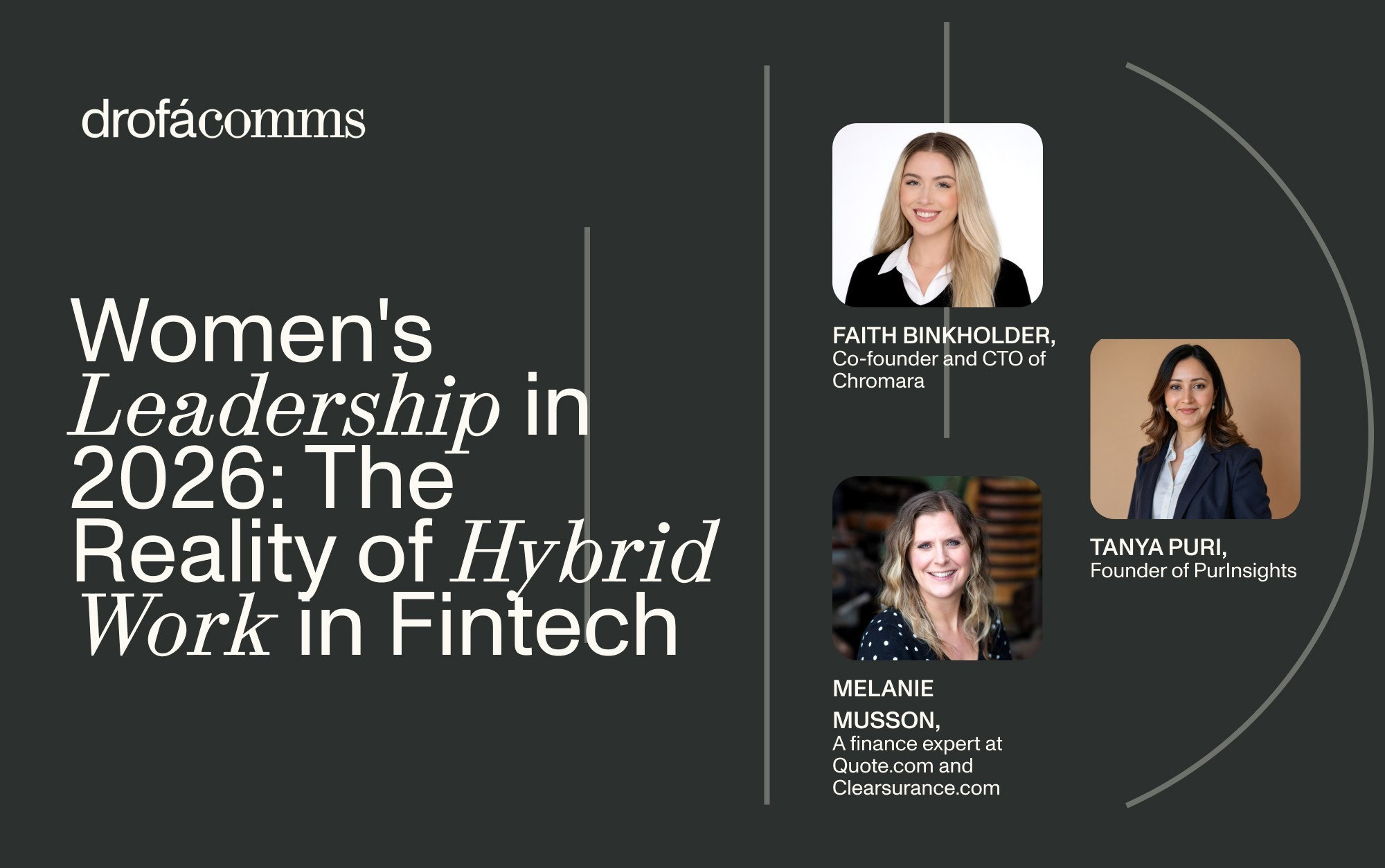
Hybrid and flexible work were once seen as a big step forward for women in finance. Fewer rigid schedules seemed to open real opportunities for professionals who tried to balance careers and personal lives. And that felt like progress that was long overdue.
But the reality turned out to be more complicated. Flexible schedules have helped many women stay in their jobs, yet they have not always helped them move up. The Deloitte Women @ Work 2025 report confirms this tendency: almost 9 in 10 women believe that using flexible working options reduces their chances of promotion. This makes it hard to argue otherwise — career progression in hybrid environments still remains uneven.
Does that mean hybrid work ultimately creates more barriers for women in fintech than it removes? Not necessarily. To find out what is really happening, the Drofa Comms team reached out to senior women professionals across fintech as part of our Women Leading the Way initiative. All of them have firsthand observed how hybrid work shapes leadership paths in the industry.
How Hybrid Work Is Really Affecting Women in Fintech
Flexible Work Only Works If You Have the Right Tools
Not everyone sees hybrid work as the problem. Faith Binkholder, Co-founder and CTO of Chromara, argues that flexibility itself is neither good nor bad for women's progression. It depends entirely on what supports it.
Faith and her co-founder built Chromara remotely, with no engineering background, no venture capital, and no established network. And yet they competed in hardware — one of the most male-dominated and resource-heavy fields in tech. What made that possible, in her view, was not the flexibility itself but what she was able to do with it. As she puts it, "remote work enabled our growth, but AI made it possible."
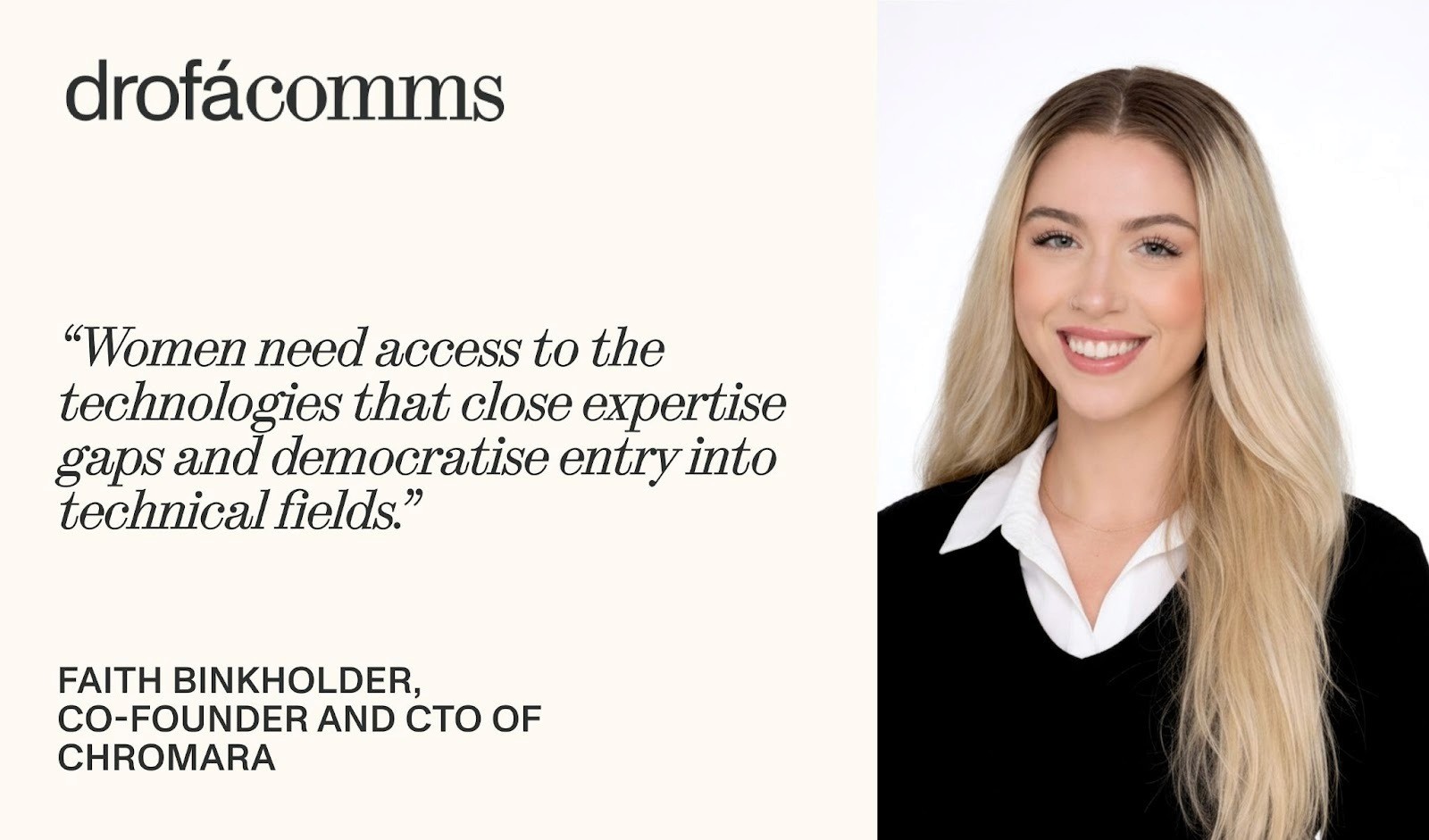
Without AI tools compressing years of specialised learning, closing expertise gaps, and replacing the consultants and networks they didn't have, flexible work alone would have meant isolation. With them, it became a competitive advantage.
So, flexibility opens a door. But if the tools, the access, and the support are not there on the other side, that door leads nowhere.
Flexibility Means Nothing If Promotions Still Reward Presence
Tanya Puri, Founder of PurInsights, candidly shares what flexible work actually looked like for her. She had to drive three hours each way to an office six months postpartum, leaving her baby for two nights a week and paying for hotels out of pocket. And she was ranked a top performer throughout all of it.
But when she eventually negotiated a one-day-in-office arrangement, Tanya had to take a pay cut to make it work. The output was never the issue. The system around her was.
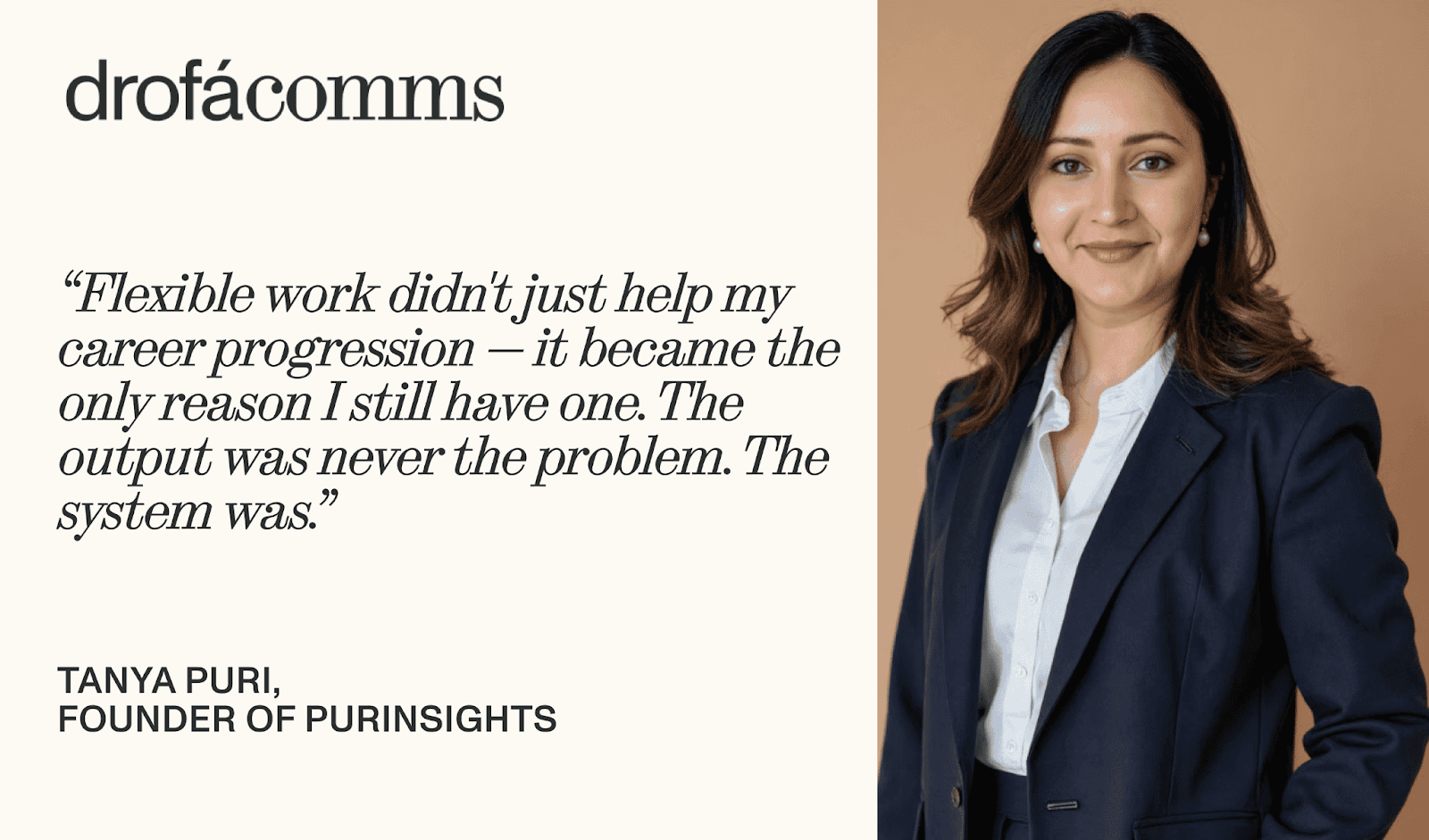
And that draws a clear line between two very different things that get called flexible work. One exists in policy documents. The other is built into how decisions on promotions are actually made — it still rewards presence over performance. When those two things don't match, women end up working flexibly but getting passed over for promotion.
Flexible work can be a lifeline. But without changing the systems around it, it remains just that — a way to survive, instead of a path to advance.
Visibility Still Drives Who Moves Up
Melanie Musson, a finance expert at Quote.com and Clearsurance.com, takes a more pragmatic view.
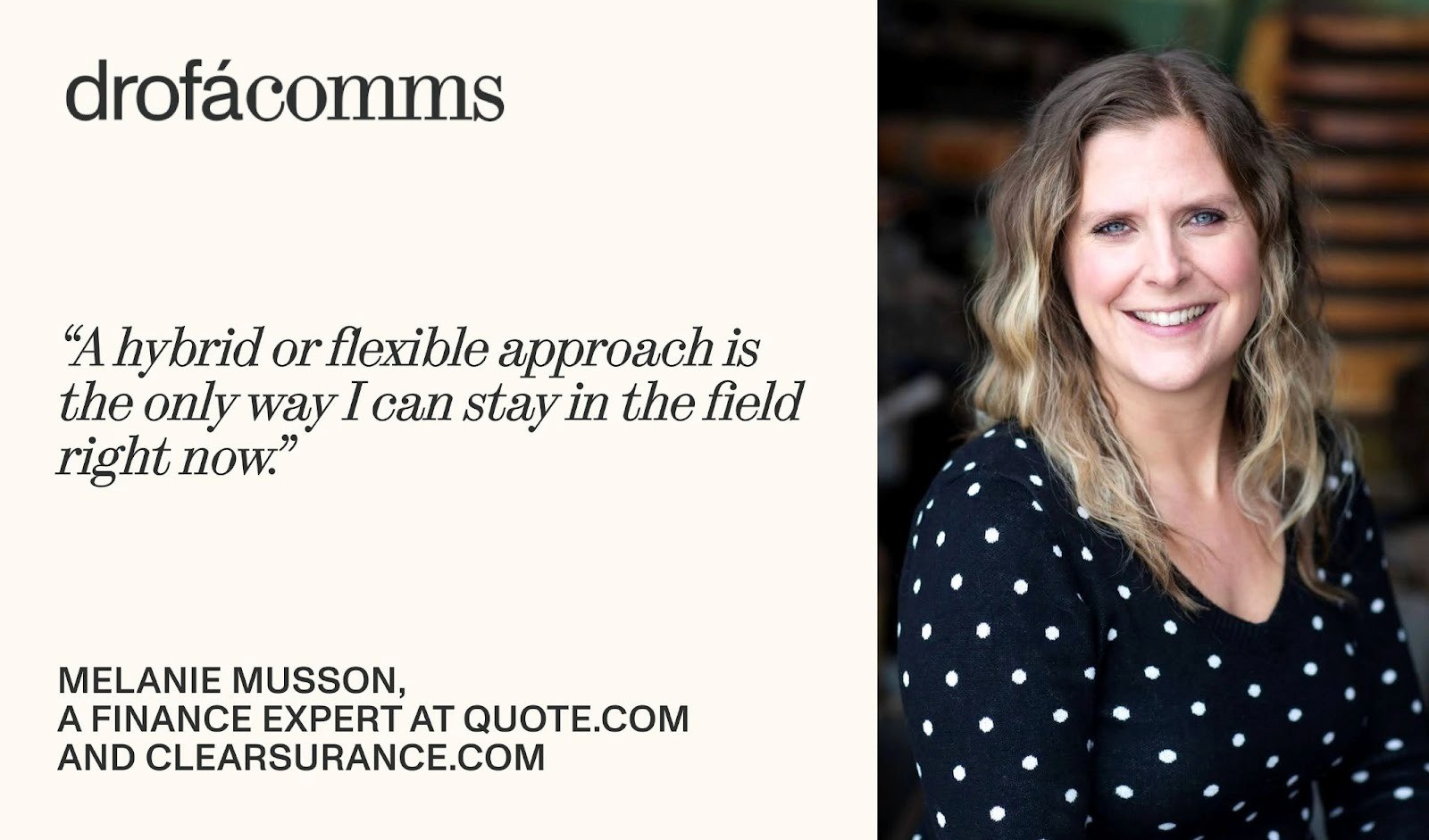
For her, hybrid work has been genuinely helpful. It allows women to manage professional responsibilities alongside caregiving and household demands that still fall disproportionately on them. Otherwise, many women would simply leave the field. And personally, Melanie says a hybrid arrangement is currently the only way she can stay active in it at all.
But staying in the field and moving up in it are two different things. And that is where she sees the tension. As she emphasises, "when you're not in the office, you're 'out of sight, out of mind.'"
Ultimately, presence still influences perception. And the latter still influences promotion. Hybrid work has genuinely helped women stay in fintech. Even so, staying and advancing are still two different conversations, and the second one remains unfinished so far.
Conclusion
Based on what we heard, we can confidently say that hybrid work does not create more barriers for women in fintech than it removes. Yet, it does not advance them meaningfully either. Flexible schedules have given women a real way to stay in the field. And that matters. However, it still has little to do with real advancement.
At Drofa Comms, we believe that will only change when organisations stop treating flexibility as the finish line. How work is evaluated, how promotions are decided, and who gets visibility — those are the questions that still need answers.
Acknowledgements: Drofa Comms is grateful to Faith Binkholder, Tanya Puri, and Melanie Musson for lending their expertise to this Women Leading the Way article.
Hybrid and flexible work were once seen as a big step forward for women in finance. Fewer rigid schedules seemed to open real opportunities for professionals who tried to balance careers and personal lives. And that felt like progress that was long overdue.
But the reality turned out to be more complicated. Flexible schedules have helped many women stay in their jobs, yet they have not always helped them move up. The Deloitte Women @ Work 2025 report confirms this tendency: almost 9 in 10 women believe that using flexible working options reduces their chances of promotion. This makes it hard to argue otherwise — career progression in hybrid environments still remains uneven.
Does that mean hybrid work ultimately creates more barriers for women in fintech than it removes? Not necessarily. To find out what is really happening, the Drofa Comms team reached out to senior women professionals across fintech as part of our Women Leading the Way initiative. All of them have firsthand observed how hybrid work shapes leadership paths in the industry.
How Hybrid Work Is Really Affecting Women in Fintech
Flexible Work Only Works If You Have the Right Tools
Not everyone sees hybrid work as the problem. Faith Binkholder, Co-founder and CTO of Chromara, argues that flexibility itself is neither good nor bad for women's progression. It depends entirely on what supports it.
Faith and her co-founder built Chromara remotely, with no engineering background, no venture capital, and no established network. And yet they competed in hardware — one of the most male-dominated and resource-heavy fields in tech. What made that possible, in her view, was not the flexibility itself but what she was able to do with it. As she puts it, "remote work enabled our growth, but AI made it possible."
Without AI tools compressing years of specialised learning, closing expertise gaps, and replacing the consultants and networks they didn't have, flexible work alone would have meant isolation. With them, it became a competitive advantage.
So, flexibility opens a door. But if the tools, the access, and the support are not there on the other side, that door leads nowhere.
Flexibility Means Nothing If Promotions Still Reward Presence
Tanya Puri, Founder of PurInsights, candidly shares what flexible work actually looked like for her. She had to drive three hours each way to an office six months postpartum, leaving her baby for two nights a week and paying for hotels out of pocket. And she was ranked a top performer throughout all of it.
But when she eventually negotiated a one-day-in-office arrangement, Tanya had to take a pay cut to make it work. The output was never the issue. The system around her was.
And that draws a clear line between two very different things that get called flexible work. One exists in policy documents. The other is built into how decisions on promotions are actually made — it still rewards presence over performance. When those two things don't match, women end up working flexibly but getting passed over for promotion.
Flexible work can be a lifeline. But without changing the systems around it, it remains just that — a way to survive, instead of a path to advance.
Visibility Still Drives Who Moves Up
Melanie Musson, a finance expert at Quote.com and Clearsurance.com, takes a more pragmatic view.
For her, hybrid work has been genuinely helpful. It allows women to manage professional responsibilities alongside caregiving and household demands that still fall disproportionately on them. Otherwise, many women would simply leave the field. And personally, Melanie says a hybrid arrangement is currently the only way she can stay active in it at all.
But staying in the field and moving up in it are two different things. And that is where she sees the tension. As she emphasises, "when you're not in the office, you're 'out of sight, out of mind.'"
Ultimately, presence still influences perception. And the latter still influences promotion. Hybrid work has genuinely helped women stay in fintech. Even so, staying and advancing are still two different conversations, and the second one remains unfinished so far.
Conclusion
Based on what we heard, we can confidently say that hybrid work does not create more barriers for women in fintech than it removes. Yet, it does not advance them meaningfully either. Flexible schedules have given women a real way to stay in the field. And that matters. However, it still has little to do with real advancement.
At Drofa Comms, we believe that will only change when organisations stop treating flexibility as the finish line. How work is evaluated, how promotions are decided, and who gets visibility — those are the questions that still need answers.
Acknowledgements: Drofa Comms is grateful to Faith Binkholder, Tanya Puri, and Melanie Musson for lending their expertise to this Women Leading the Way article.
London office
Rise, created by Barclays, 41 Luke St, London EC2A 4DP
Nicosia office
2043, Nikokreontos 29, office 202
DP FINANCE COMM LTD (#13523955) Registered Address: N1 7GU, 20-22 Wenlock Road, London, United Kingdom For Operations In The UK
AGAFIYA CONSULTING LTD (#HE 380737) Registered Address: 2043, Nikokreontos 29, Flat 202, Strovolos, Cyprus For Operations In The EU, LATAM, United Stated Of America And Provision Of Services Worldwide
Drofa © 2024
London office
Rise, created by Barclays, 41 Luke St, London EC2A 4DP
Nicosia office
2043, Nikokreontos 29, office 202
DP FINANCE COMM LTD (#13523955) Registered Address: N1 7GU, 20-22 Wenlock Road, London, United Kingdom For Operations In The UK
AGAFIYA CONSULTING LTD (#HE 380737) Registered Address: 2043, Nikokreontos 29, Flat 202, Strovolos, Cyprus For Operations In The EU, LATAM, United Stated Of America And Provision Of Services Worldwide
Drofa © 2024
